 Alex Morgan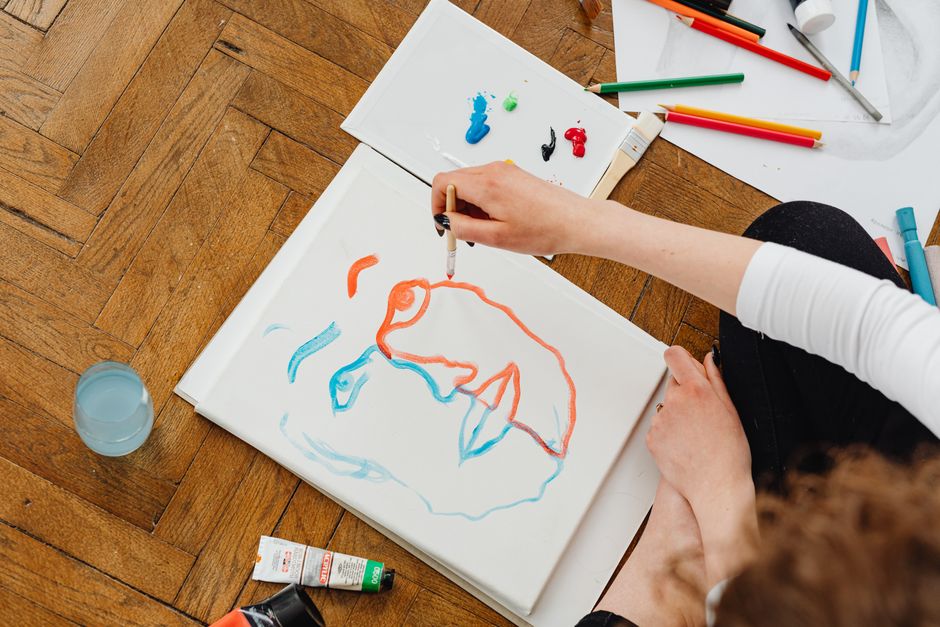
Most people who ask me about art therapy are secretly asking something else. They’re asking: Is this real therapy, or is it just crafts?
That question makes complete sense. The name doesn’t help. “Art therapy” sounds like something you’d do at a summer camp, not something a licensed clinician uses to help someone process childhood trauma or manage a chronic anxiety disorder. And honestly, I had the same skepticism early in my career. I remember sitting in on my first art therapy session, watching a middle-aged man slowly fill a page with black marker while talking almost nothing, and thinking, “What is this accomplishing?” By the end of the session, I had my answer. He’d externalized something he couldn’t say in words. The image gave it form. The clinician knew exactly what to do with that.
So let’s start from the beginning, because you deserve a clear explanation, not a sales pitch.
What Art Therapy Actually Is (and What It Isn’t)
Art therapy is a distinct mental health profession, not a creative hobby dressed up in clinical language. A registered art therapist (the credential is ATR, or ATR-BC for board-certified) holds a master’s degree in art therapy, completes supervised clinical hours, and passes a credentialing exam administered by the Art Therapy Credentials Board (ATCB). That’s the baseline. Anyone calling themselves an art therapist without that training is, bluntly, not an art therapist, and it’s worth asking about credentials directly.
Here’s what separates art therapy from, say, an art class or a coloring book you buy for stress relief (though those things aren’t worthless, just different): the art-making itself is therapeutic, but the therapeutic relationship and the clinical processing around the image are what produce lasting change. You’re not making something pretty. You’re making something informative, both to you and to the clinician.
The theoretical underpinnings draw from psychodynamic theory, attachment theory, and cognitive-behavioral frameworks depending on the therapist’s orientation. A 2016 study published in the Journal of Affective Disorders found significant reductions in depression and anxiety symptoms among adults who received art therapy compared to control groups. The effect sizes weren’t enormous, but they were clinically meaningful, and the research has only grown since then. As of 2026, the American Art Therapy Association cites over 100 peer-reviewed studies supporting its efficacy across populations ranging from cancer patients to veterans with PTSD.
Who It’s Actually For
Helpful resource: The Body Keeps the Score by Bessel van der Kolk is a top-rated option for this. (As an Amazon Associate this site earns from qualifying purchases.)
You might be wondering if art therapy is only for people who are “artistic.” It’s not, and I’d push back hard on that assumption. The clients I’ve seen benefit most from art therapy are often people who have never considered themselves creative. That’s not coincidental. If you’re someone who has spent decades leading with language, with rationality, with the perfectly composed sentence, being asked to make a mark on a page without judgment can be genuinely disorienting. And that disruption is often where the therapy happens.
Art therapy is used clinically with:
- Children and adolescents who lack the vocabulary for emotional experiences (this is probably its most well-established application)
- Adults processing trauma, grief, or abuse histories where verbal re-telling can be re-traumatizing
- People with dementia, where language has become compromised but visual and tactile engagement remains accessible
- Veterans and first responders dealing with PTSD
- Oncology patients managing fear, identity disruption, and grief during treatment
- Individuals with eating disorders working on body image and self-perception
One thing I want to be specific about: art therapy is not a replacement for psychiatric medication when medication is indicated. It’s often most effective as part of a broader treatment plan. I’ve seen the best outcomes when a client has a prescribing psychiatrist, a talk therapist, and an art therapist working in loose coordination. That’s not always possible logistically or financially, but it’s the ideal.
What a Session Actually Looks Like
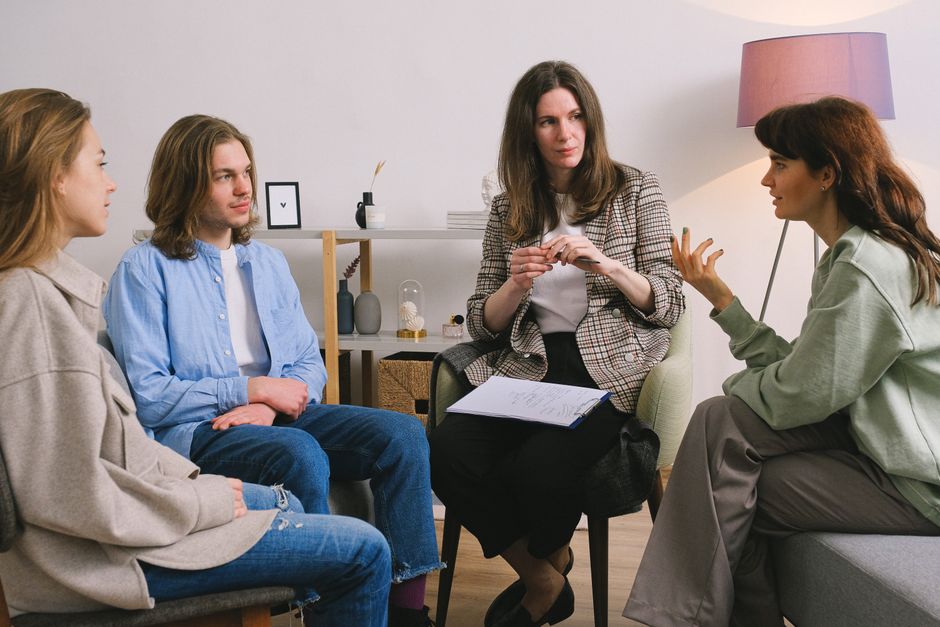
People always want to know this, and the honest answer is: it varies considerably by therapist orientation and client need. But here’s a fairly typical shape.
A session is usually 50-60 minutes. The therapist might offer a prompt (“Can you make an image of what anxiety feels like in your body right now?”) or might leave it completely open. You work with whatever materials are available, which can range from colored pencils and watercolors to clay, collage, or even digital tools. You don’t finish a masterpiece. That’s not the goal. Then you talk about the image: what you notice, what surprised you, what you’d want to change. The therapist reflects, asks questions, and begins to connect the visual content to the therapeutic work you’re doing together.
Concrete example: A 34-year-old woman I worked alongside, in a clinical coordination role, had been unable to talk directly about a difficult relationship with her mother for months of traditional talk therapy. Her art therapist asked her to create a collage representing “home.” She brought in images of cold colors, empty rooms, a locked door. What she couldn’t say in a sentence, she assembled in 20 minutes.
Action taken: The therapist used that collage as a starting point for several subsequent sessions, exploring each image element.
Result: Within eight weeks, the client had begun directly naming experiences from her childhood she hadn’t been able to access verbally. Her GAD symptom scores (measured by the GAD-7 scale) dropped from a 14 (moderate) to a 7 (mild) over that period.
That’s not magic. That’s a clinical tool working as intended.
Finding a Qualified Art Therapist
This is where I want to be practical with you, because the referral landscape is genuinely confusing.
Start with the ATCB’s directory at the Art Therapy Credentials Board website (atcb.org), which lists credentialed practitioners by location. Psychology Today’s therapist directory also lets you filter by “art therapy” as a specialty, though I’d still verify credentials directly, since the listing process doesn’t verify specialization claims independently.
Cost, as of July 2026, varies widely. Private-pay art therapy sessions typically run anywhere from $100 to $200 per session depending on location and experience level. Some art therapists accept insurance; many don’t. Community mental health centers sometimes offer art therapy groups, which are significantly more affordable. If cost is a barrier, ask directly. Many clinicians offer sliding scale fees, and they’d rather work with you than not at all.
A second concrete example worth sharing: a community mental health clinic in Chicago ran a six-week open-enrollment art therapy group for adults with depression. 22 participants, one licensed ATR, 90-minute group sessions.
Action taken: Participants completed PHQ-9 depression screens at intake and discharge.
Result: Average PHQ-9 score dropped from 16.4 to 11.1 across the group, a clinically significant reduction, at a participant cost of $0 because the group was grant-funded.
Group art therapy is underutilized and underappreciated. Worth asking about.
What to Try at Home (and What It Can’t Replace)
I’m going to be direct here: self-guided art-making is not a substitute for clinical art therapy. But it can be a meaningful complement, particularly between sessions or while you’re waiting to get connected with a therapist.
There are solid workbooks worth considering. The Art Therapy Sourcebook by Cathy Malchiodi (one of the field’s most recognized figures) is a genuinely useful introduction (available on Amazon, and yes, this site may earn a small commission if you purchase through our links). There are also CBT-integrated art journaling guides that combine cognitive restructuring prompts with visual exercises, which some people find easier to engage with than traditional thought records.
If you’re in a moment of crisis, please don’t try to self-therapize through art. Reach out to the 988 Suicide and Crisis Lifeline by calling or texting 988. That’s what it’s there for.
Sources
- American Art Therapy Association (2026): Overview of art therapy definition, credentials, and research evidence base. arttherapy.org
- Art Therapy Credentials Board (ATCB): Credentialing standards, ATR and ATR-BC requirements, and practitioner directory. atcb.org
- Blomdahl, C., et al. (2016): “Art therapy for depression: Expert opinions on its main components.” Journal of Affective Disorders, 200, 249-255. Peer-reviewed study on mechanisms and outcomes.
- Malchiodi, C. (2012): The Art Therapy Sourcebook. McGraw-Hill. Widely used clinical and lay reference text.
- Stuckey, H.L. & Nobel, J. (2010): “The connection between art, healing, and public health.” American Journal of Public Health, 100(2), 254-263. Foundational review of creative arts and health outcomes.
This article is for general informational purposes only and does not constitute mental health, medical, or clinical advice. If you are in crisis or experiencing a mental health emergency, please contact the 988 Suicide and Crisis Lifeline (call or text 988) or go to your nearest emergency room. Always consult a licensed mental health professional for care specific to your needs.
Recommended Resources
Disclosure: As an Amazon Associate, we earn a small commission from qualifying purchases at no extra cost to you. We only recommend products that genuinely support the topics covered in this article.
- Feeling Good: The New Mood Therapy (~$14), The most clinically studied self-help book for depression, recommended by therapists worldwide as CBT-based self-treatment.
- Depression & Anxiety Therapy Journal (~$10), 8-week guided journal with trigger tracking and mood diary, mirrors the homework your therapist would assign between sessions.