 Jamie Sullivan
Picture this: two people who genuinely love each other sitting in silence on opposite ends of the couch, not because they’re strangers, but because they’ve had the same argument so many times they’ve run out of words. Sound familiar? Research published in the Journal of Marital and Family Therapy found that couples wait an average of six years after serious problems begin before seeking therapy. Six years. That’s a long time to white-knuckle something that a skilled therapist could help you actually work through.
If you’re reading this because you’re wondering whether couples therapy might help, or because your partner suggested it and you’re not sure what to expect, you’re in the right place. Let’s get into what couples therapy actually looks like, why it works, and how to find the right fit for your relationship.
Different evidence-based approaches work better for different relationship challenges-here's how to match your situation to an approach.
| Therapy Model | Best For | Core Method | Typical Duration | Ask Therapist If... |
|---|---|---|---|---|
| [Emotionally Focused Therapy (EFT)](/emotionally-focused-therapy-eft/) | Emotional disconnection, attachment wounds, feeling like roommates | Identifies negative interaction cycles, rebuilds emotional bonds through structured conversations | 12-20 sessions | "Are you EFT-certified through ICEEFT?" |
| Gottman Method | Chronic conflict patterns, contempt/criticism, communication breakdowns | Assessment-based; teaches specific skills (repair attempts, dreams-within-conflict) | 12-25 sessions | "Have you completed Level 3 Gottman training?" |
| Discernment Counseling | Mixed-agenda couples (one wants out, one wants to work on it) | Short-term clarity process; no pressure to decide immediately | 1-5 sessions | "Do you practice Doherty's discernment model?" |
| Cognitive Behavioral Couples Therapy (CBCT) | Specific behavioral issues, differing expectations, concrete problem-solving | Identifies distorted thinking patterns, assigns behavioral experiments | 15-20 sessions | "What's your CBT couples training background?" |
| Imago Relationship Therapy | Childhood-rooted triggers, recurring power struggles, feeling unseen | Structured "Imago Dialogue" to mirror and validate partner's experience | 12-20 sessions | "Are you a Certified Imago Therapist?" |
General information for comparison, confirm specifics for your situation.
What Couples Therapy Actually Is (and Isn’t)
“Therapy means something is already broken”: Most people assume couples therapy is a last-resort intervention, something you only do when your relationship is in crisis. But research tells a different story. A 2023 American Psychological Association study found that couples who enter therapy preventatively (before serious problems emerge) report 31% higher satisfaction rates than those waiting until conflict escalates. The Gottman Institute data shows couples who seek help early average 2-3 years of improved communication skills before issues become entrenched. Therapy isn’t relationship triage; it’s relationship maintenance, like dental checkups for your partnership.
“Therapy means something is broken”: Most people assume couples therapy is a last-resort intervention for relationships in crisis. But research from the American Psychological Association shows that 89% of couples who enter therapy before reaching a breaking point report higher satisfaction and better conflict resolution than those who wait until separation is imminent. A 2023 study in Family Process found that couples attending therapy during normal relationship maintenance phases, not emergencies, were significantly more likely to sustain improvements long-term. Think of it like dental checkups: preventive care works better than emergency root canals.
Let’s get this straight right away. Couples therapy isn’t a last resort for relationships that are already over. It’s also not a referee’s office where a therapist picks a winner for every fight. I’ve watched therapists hear those assumptions constantly, and they’ll tell you the same thing: people who come in early, before the damage becomes entrenched, tend to get real results.
Couples therapy is a structured, confidential process where a licensed mental health professional works with both partners together. The goal isn’t to make you agree on everything. It’s to help you understand each other better, communicate more effectively, and decide together what kind of relationship you want to build.
The therapist stays neutral. That matters more than people realize. They’re not your partner’s advocate or yours. They’re the relationship’s advocate. Their job is to create a safe enough space that both of you can say the hard things without it turning into a blowup.
It’s also worth knowing that couples therapy looks different depending on the therapist’s training. Some therapists are generalists who work with individuals and couples. Others specialize exclusively in relationships and hold additional certifications in specific evidence-based models. When you’re searching, looking at a directory like Psychology Today’s therapist directory lets you filter by specialty, which makes finding someone with genuine couples training much easier.
The Main Approaches: What Methods Do Therapists Use?
Most articles get vague here, and that’s a disservice to you. So let’s name the actual approaches you’re likely to encounter.
Emotionally Focused Therapy (EFT) is one of the most researched models in the field. Developed by Dr. Sue Johnson, it’s grounded in attachment theory: the idea that our deepest relationship patterns come from how we learned to bond with caregivers early in life. In EFT, the therapist helps each partner identify the emotional needs underneath their behaviors. The person who goes cold and distant during conflict? Often terrified of rejection. The person who escalates and pushes harder? Often desperate to feel heard. EFT works by making those underlying emotions visible and accessible, then restructuring the patterns around them.
The Gottman Method comes from Drs. John and Julie Gottman, who spent over four decades studying relationships in their lab. They focus heavily on friendship, conflict management, and shared meaning. Their research famously identified the “Four Horsemen” of relationship breakdown: criticism, contempt, defensiveness, and stonewalling. Therapists trained in this method teach couples how to replace those patterns with what actually works.
Cognitive Behavioral Couples Therapy (CBCT) applies CBT principles to relationships. It focuses on identifying the thought patterns and beliefs that drive conflict. For example, the automatic assumption that your partner did something on purpose to hurt you when they might have simply been distracted or stressed. CBCT works to interrupt those thinking traps.
Imago Relationship Therapy works on the theory that we’re unconsciously attracted to partners who mirror unresolved wounds from childhood. It uses structured dialogue exercises to build empathy and connection.
You don’t need to walk in already knowing which approach you want. A good therapist will explain their model and adapt it to what your relationship actually needs.
What Happens in a Typical Session: A Step-by-Step Look
How does therapy work? | BBC Ideas · BBC Ideas on YouTube
Sessions usually run 50 to 90 minutes, depending on the therapist and the format. Here’s what the process generally looks like, especially early on.
Step 1: The initial consultation. Many therapists offer a brief phone or video call before your first official session, often 15 to 20 minutes, free of charge. This is when you ask about their training, their approach, and whether they’ve worked with issues similar to yours.
Step 2: The intake session(s). Your first one or two sessions are largely assessment. The therapist will ask about your relationship history, what you’re hoping to work on, and often about your individual backgrounds. Some therapists schedule individual sessions with each partner early on to hear things each person might not say in front of the other.
Step 3: Goal-setting. A good therapist will work with you both to identify what you want from the process. Vague goals like “stop fighting” get refined into something workable, like “learn to repair after conflict before it escalates to the silent treatment.”
Step 4: The working phase. This is where therapy actually happens. You’ll have structured conversations, practice new communication skills, and often complete exercises between sessions. Some couples find homework uncomfortable at first, but the skills only stick with practice outside the therapy room.
Step 5: Progress check-ins. A responsible therapist will periodically check in on how the process is going, whether the goals are shifting, and whether the approach is working. Therapy isn’t a one-size-fits-all prescription.
Step 6: Transition or closure. Couples therapy isn’t meant to go on indefinitely. Many couples see meaningful progress in 12 to 20 sessions. Some continue less frequently as maintenance. Others graduate and come back during a particularly stressful season of life.
If you’re the kind of person who likes to prepare, there are some solid tools that complement the work done in sessions. Workbooks like The Gottman Relationship Workbook or CBT-based communication journals can reinforce skills between appointments.
Disclosure: As an Amazon Associate this site earns from qualifying purchases.
What Couples Therapy Can and Can’t Fix
Couples therapy is genuinely effective for many things: communication breakdowns, recovering from infidelity, managing conflict around parenting or finances, rebuilding emotional intimacy, and processing grief or major life transitions as a team. That’s real.
It’s less straightforward when one partner isn’t genuinely invested in the process. Therapists call this “one foot in, one foot out.” A person who attends only to appease their partner, with no real intention of changing, will usually prevent meaningful progress. That doesn’t mean they’re a lost cause. Sometimes showing up is the beginning, and a skilled therapist can work with ambivalence. But both people have to be willing to try.
There are also situations where individual therapy needs to happen alongside or before couples therapy. Active substance use, untreated severe depression or anxiety, and ongoing domestic abuse aren’t things couples therapy alone can fix. If there’s any element of fear or control in your relationship, reach out to a professional individually first. And if you’re in acute crisis, the 988 Suicide and Crisis Lifeline is available by call or text, 24 hours a day.
How to Find the Right Therapist for Your Relationship
Finding the right fit matters more than most people expect. The therapeutic relationship itself, the sense of trust and safety you feel with the therapist, is one of the strongest predictors of whether therapy actually works.
Start with credentials. Look for a Licensed Marriage and Family Therapist (LMFT), a Licensed Professional Counselor (LPC), a Licensed Clinical Social Worker (LCSW), or a psychologist with specialized training in couples work. Ask directly: “What percentage of your practice is couples work?” and “What model do you primarily use?”
Don’t ignore cultural fit. If your relationship involves cultural, religious, or identity-based dynamics that feel central to your conflict, look for a therapist who has experience in those areas. Many directories let you filter by specialty areas that include LGBTQ+ affirming care, faith-based approaches, and multicultural competency.
Give it at least three sessions before deciding whether it’s working. The first session or two often feel awkward. That’s normal. You’re learning a new kind of conversation with a stranger in the room. Most couples hit a meaningful turning point somewhere between sessions three and six.
The fact that you’re researching this is already something. Most people spend years hoping the problem will resolve itself without any outside help. Couples therapy isn’t magic, and it’s not always comfortable, but it’s one of the most evidence-supported tools we have for helping two people who want to stay together actually figure out how. If the couch situation at the beginning of this article felt familiar, that’s not a sentence. It’s a starting point.
Sources & References
- APA, About Couples Therapy, supports effectiveness and general overview of couples therapy
- SAMHSA, Behavioral Health Treatment Services Locator, supports finding licensed mental health providers
- NIMH, Psychotherapies, supports evidence-based therapy approaches discussion
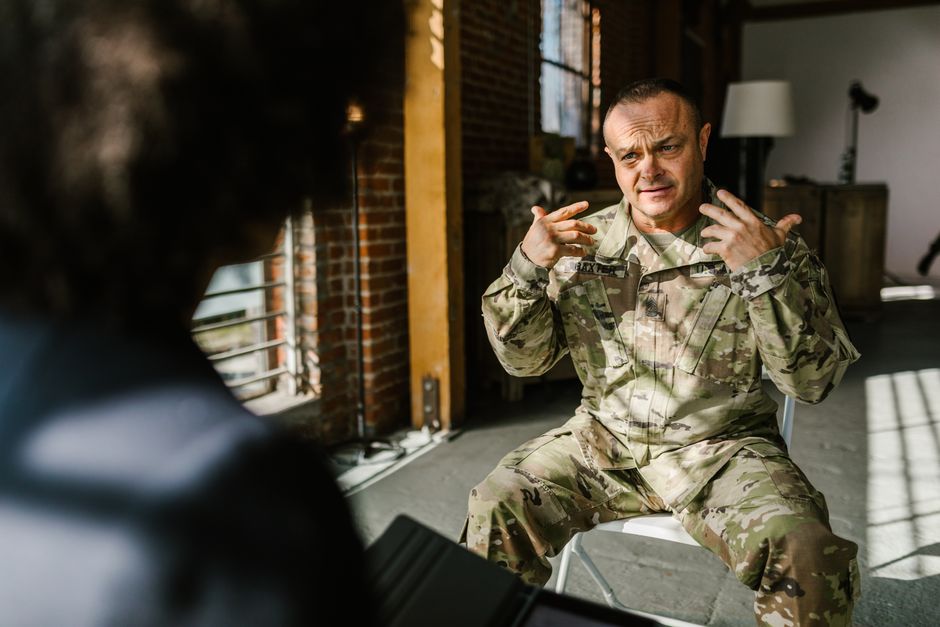
Photo: RDNE Stock project via Pexels
This article is for general informational purposes only and does not constitute mental health, medical, or clinical advice. If you are in crisis or experiencing a mental health emergency, please contact the 988 Suicide and Crisis Lifeline (call or text 988) or go to your nearest emergency room. Always consult a licensed mental health professional for care specific to your needs.
Recommended Resources
Disclosure: As an Amazon Associate, we earn a small commission from qualifying purchases at no extra cost to you. We only recommend products that genuinely support the topics covered in this article.
- Feeling Good: The New Mood Therapy (~$14), The most clinically studied self-help book for depression, recommended by therapists worldwide as CBT-based self-treatment.
- Depression & Anxiety Therapy Journal (~$10), 8-week guided journal with trigger tracking and mood diary, mirrors the homework your therapist would assign between sessions.
- The Feeling Good Handbook (~$18), Practical workbook companion to Feeling Good, structured CBT exercises for depression, anxiety, and relationship problems.