 Taylor Brooks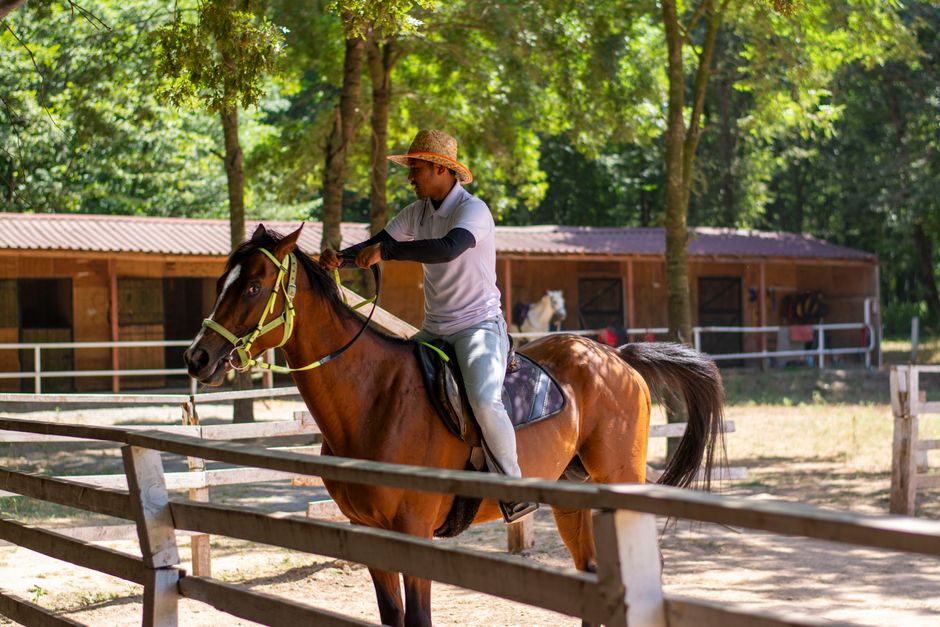
If you’re reading this, you’ve probably already Googled “equine therapy” at least once and ended up more confused than when you started. Maybe you saw a feel-good news segment, or a friend mentioned it helped their kid, or your therapist brought it up as something worth considering. And now you’re sitting here wondering: is this actually legitimate, or is it just an expensive way to pet horses?
Fair question. Here’s what I tell people when they ask me that directly: equine therapy is real, it’s evidence-supported, and it’s genuinely not for everyone. That last part matters, because a lot of wellness content will sell you on something without being honest about who it actually helps. I’d rather give you the full picture.
What Equine Therapy Actually Is (and Isn’t)
The term gets used loosely, so let’s be precise. “Equine-assisted therapy” is an umbrella phrase covering several distinct modalities. The most clinically rigorous is Equine-Assisted Psychotherapy (EAP), where a licensed mental health professional and a certified equine specialist work together in the same session. The client isn’t necessarily riding the horse. Often, they’re doing groundwork: leading the horse, grooming it, observing it. The therapeutic work happens in that interaction, and then in processing what came up with the therapist afterward.
This is meaningfully different from therapeutic horseback riding, which is primarily about physical rehabilitation and motor skill development for people with disabilities. Both are valuable. They’re not the same thing.
The most widely recognized credentialing framework in the U.S. is through the PATH Intl. (Professional Association of Therapeutic Horsemanship International) and EAGALA (Equine Assisted Growth and Learning Association). If you’re looking at a provider, you want to see credentials from one of these organizations alongside the therapist’s clinical licensure. The horse specialist and the therapist are two separate roles. When a program conflates them, that’s a red flag.
Why Horses, Though
Helpful resource: The Mindfulness and Acceptance Workbook for Anxiety is a top-rated option for this. (As an Amazon Associate this site earns from qualifying purchases.)
I get this question constantly. Why not dogs? (And yes, animal-assisted therapy with dogs is also legitimate and well-studied.) The honest answer is that horses have specific qualities that create a particular kind of therapeutic dynamic.
Horses are prey animals. They’re wired to read emotional and physiological cues with remarkable precision because their survival historically depended on detecting threat quickly. They respond to your nervous system, not your words. You can tell yourself you’re calm. The horse will know you’re not.
That’s not mystical. It’s behavioral. A horse that suddenly becomes restless or refuses to move when a client approaches is giving the therapist real-time, unfiltered information that the client’s verbal self-report might not capture. I’ve talked with clinicians who describe it as a kind of biofeedback that you can’t fake your way through.
For people who have learned to intellectualize their feelings, or who have spent years convincing themselves and everyone around them that they’re fine, this can be disorienting. And disorienting, in a safe context with a good therapist, is often exactly the point.
Who Benefits Most
The research base is strongest for a few specific populations, and I think it’s worth being honest about that rather than claiming equine therapy fixes everything.
Trauma survivors, especially those with complex PTSD, tend to respond well. A 2018 paper in the Journal of Trauma & Dissociation found significant reductions in PTSD symptom severity in veterans following equine-assisted psychotherapy, and this lines up with what clinicians report anecdotally. The non-verbal, body-based nature of EAP fits with what we know about trauma: it’s stored somatically, and talk therapy alone sometimes can’t reach it.
Adolescents with behavioral issues, people in addiction recovery, and individuals on the autism spectrum are also populations where there’s meaningful clinical evidence. NAMI acknowledges animal-assisted therapy as a complementary intervention for several mental health conditions, though they’re appropriately careful about calling it a standalone treatment.
I want to be direct about something that sometimes gets pushback: equine therapy works best as part of a broader treatment plan, not as a replacement for it. If someone is managing severe depression or a serious mood disorder, EAP alongside medication management and individual therapy is a reasonable combination. EAP instead of everything else is not something I’d recommend.
What a Session Actually Looks Like
| Aspect | Details |
|---|---|
| Session Duration | 50 to 90 minutes |
| Cost Range | $75 to $200+ per session |
| Setting | Typically outdoors |
| Key Credentials | PATH Intl. or EAGALA certification + therapist licensure |
| Primary Modality | Equine-Assisted Psychotherapy (EAP) with groundwork |
| Role Structure | Licensed mental health professional + certified equine specialist (separate roles) |
First session anxiety is real. People imagine they’re going to be asked to ride a giant animal they’ve never met, in front of strangers, while crying. That’s almost never what happens.
Most introductory sessions start on the ground. You’ll meet the horse. You might be asked to observe the horse and share what you notice. You might be given a simple task, like walking the horse through a set of cones, and then the therapist asks you what that was like. The deceptively simple question “what did you notice?” is doing a lot of work. It’s inviting you to pay attention to your internal experience, which is the whole thing.
Sessions are typically 50 to 90 minutes, and they’re often outdoors, which itself has a documented calming effect. Cost varies significantly. You’re looking at anywhere from $75 to $200+ per session depending on location, program structure, and whether insurance covers any portion. Some programs operate on sliding scales. Worth asking.
Finding a Legitimate Program
This is where I’d encourage you to slow down and be a little skeptical. Equine therapy has attracted some providers who are more interested in the pastoral aesthetic than the clinical rigor. Warm barn, friendly horses, and a practitioner whose credentials are vague? That’s not therapy. That’s a trail ride with feelings.
When you’re vetting a program, ask specifically: Is the mental health clinician licensed in your state? What are their credentials beyond the equine certification? How do they handle clients who have experienced trauma? What does their intake process look like?
SAMHSA’s treatment locator is a good starting point for finding broader mental health resources, though it won’t filter specifically for equine programs. For that, the EAGALA and PATH Intl. directories are your best bets. Search by zip code, then verify the credentials of everyone involved.
If you’re working with a therapist already, asking them for a referral is often the most reliable path. They’ll know the local programs and can help you decide whether it’s a good fit for where you are clinically.
A Note on Complementary Resources
For people who are drawn to the body-based, present-moment aspects of equine therapy, there are good supporting tools to use between sessions. Somatic awareness practices, guided mindfulness, and structured journaling around body sensations can all reinforce what EAP is trying to do. Something like The Body Keeps the Score Workbook or a trauma-informed mindfulness guide (you can find several on Amazon, where this site may earn a small commission on purchases) can be genuinely useful companions to this kind of work.
Frequently Asked Questions
Is equine therapy covered by insurance?
Sometimes. A small number of insurance plans cover it when provided by a licensed mental health professional and documented as psychotherapy. You’ll need to call your insurer directly and ask whether equine-assisted psychotherapy is covered under your behavioral health benefits. It’s worth the call.
Do I need to know how to ride a horse to benefit from equine therapy?
No. Most evidence-based equine-assisted psychotherapy doesn’t involve riding at all. The therapeutic work happens on the ground, in relationship with the horse, not on its back.
Is equine therapy appropriate for children?
Yes, and it’s actually one of the strongest areas of evidence. Children with trauma histories, anxiety, ADHD, and autism have all been studied in the context of equine-assisted interventions. Younger children often engage with the experiential format more readily than they would with traditional talk therapy.
How is equine therapy different from just spending time with animals?
The difference is clinical structure. In equine-assisted psychotherapy, a licensed therapist is actively working with you, interpreting what’s happening in the horse interaction, and guiding the processing of it. The horse is a therapeutic tool, not just a pleasant presence.
How many sessions does it typically take to see results?
There’s no universal number. Some people report noticeable shifts within four to six sessions. Others engage with it over months. It depends heavily on what you’re working on, the skill of the clinical team, and how it fits into your broader care. Don’t let anyone promise you a specific outcome or timeline.
This article is for general informational purposes only and does not constitute mental health, medical, or clinical advice. If you are in crisis or experiencing a mental health emergency, please contact the 988 Suicide and Crisis Lifeline (call or text 988) or go to your nearest emergency room. Always consult a licensed mental health professional for care specific to your needs.
Sources
Disclosure: As an Amazon Associate, we earn a small commission from qualifying purchases at no extra cost to you. We only recommend products that genuinely support the topics covered in this article.
- Feeling Good: The New Mood Therapy (~$14), The most clinically studied self-help book for depression, recommended by therapists worldwide as CBT-based self-treatment.
- Depression & Anxiety Therapy Journal (~$10), 8-week guided journal with trigger tracking and mood diary, mirrors the homework your therapist would assign between sessions.
Recommended Resources
Disclosure: As an Amazon Associate, we earn a small commission from qualifying purchases at no extra cost to you. We only recommend products that genuinely support the topics covered in this article.
- Feeling Good: The New Mood Therapy (~$14), The most clinically studied self-help book for depression, recommended by therapists worldwide as CBT-based self-treatment.
- Depression & Anxiety Therapy Journal (~$10), 8-week guided journal with trigger tracking and mood diary, mirrors the homework your therapist would assign between sessions.