 Jamie Sullivan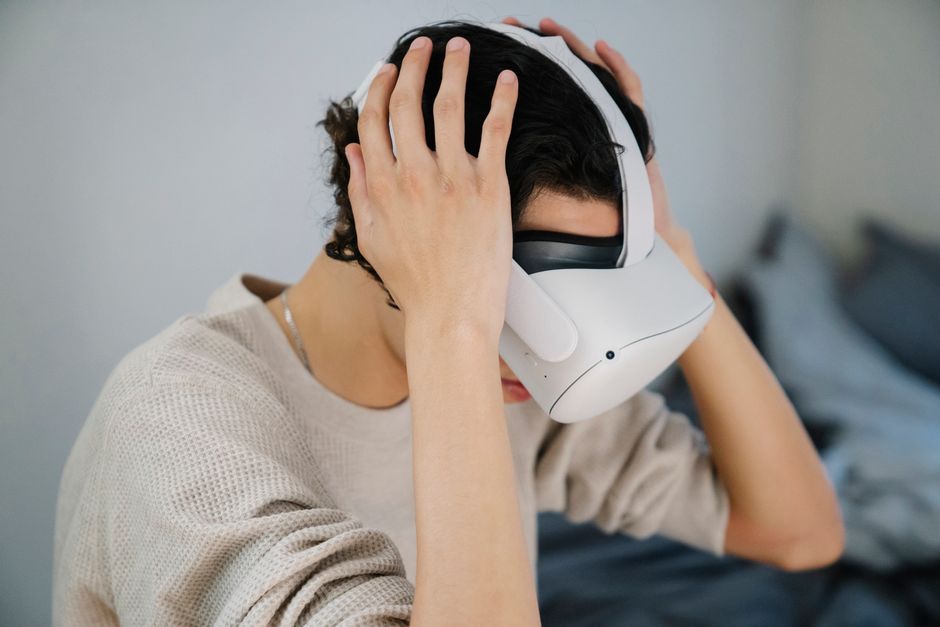
If you’ve been living with depression for a while, you already know the exhaustion of trying things that don’t quite work, or work partially, or work for a while and then stop. Maybe antidepressants have been part of your story, maybe they haven’t, but either way you’ve probably heard the statistic that about a third of people with major depressive disorder don’t respond adequately to medication. So when news broke that the FDA approved a brain stimulation headset you can use at home, your ears likely perked up. And then came the questions. Is this real? Does it actually work? Who’s it for? Can I afford it? Here’s what I tell people who ask me about the Flow Neuroscience FL-100: it’s genuinely new, it’s genuinely promising, and it’s worth understanding clearly before you get either too excited or too dismissive.
The FL-100 received FDA clearance in December 2025, making it the first at-home brain stimulation device approved for treating major depressive disorder in American adults. As reported by Forbes in January 2026, the device uses transcranial direct current stimulation, or tDCS, which is a different technology than the clinic-based transcranial magnetic stimulation (TMS) many people have heard of. You wear a headband for 30 minutes per session over a 12-week course, guided by a smartphone app that connects you to remote clinical supervision. It launched in U.S. retail around mid-2026 at an estimated $500 to $800, and it requires a prescription. That last part matters, and we’ll get to it.
- FDA approved the FL-100 in December 2025 , the first at-home brain stimulation device for depression cleared in the U.S.
- A pivotal trial showed 58% remission after 10 weeks, nearly double the 29% placebo rate.
- U.S. price is estimated at $500–$800; insurance coverage details were expected by early 2026.
- The device uses tDCS, not TMS , it's worn 30 min/session over 12 weeks with app-guided clinical supervision.
- Prescription is required; it's designed to complement, not replace, therapy or medication.
What the Research Actually Shows
The remission numbers are what stop most people in their tracks. In the pivotal trial of 174 participants, 58% achieved remission after 10 weeks. The placebo group came in at 29%. That’s not a marginal difference. For context, many antidepressants achieve remission rates in a similar range, somewhere between 30% and 60% depending on the drug and the study, so the FL-100 is holding its own in honest comparisons, not outperforming everything ever tested.
The European track record adds useful texture. Flow Neuroscience has had over 55,000 users across Europe, where the device was already available before U.S. clearance. Among those users, 77% reported meaningful symptom improvement within three weeks, according to Psychiatric Times. Real-world use figures like this are always a bit messier than controlled trial data, because people self-select and reporting is subjective. But 77% across a large, diverse population is a signal worth taking seriously.
One thing I want to be honest about: a single pivotal trial of 174 people is a starting point, not a final verdict. The FDA clearance is real and meaningful, but as with any relatively new treatment, longer-term data and broader population studies will build a more complete picture over time. This is worth discussing with your prescribing clinician.
tDCS vs. TMS: Why the Difference Matters
Helpful resource: First, We Make the Beast Beautiful by Sarah Wilson is a top-rated option for this. (As an Amazon Associate this site earns from qualifying purchases.)
You might be wondering why this matters if both involve electricity and your brain. It matters quite a bit for your daily life. TMS, transcranial magnetic stimulation, typically requires you to sit in a clinic three to five times a week for several weeks. It’s time-consuming, often expensive at $6,000 to $12,000 for a full course, and not accessible if you live far from a specialty clinic or can’t take that much time off work.
The FL-100’s tDCS technology delivers a low electrical current through scalp electrodes. It’s less intense than TMS, which is partly why it can be done safely at home. The app handles session timing, provides guidance, and maintains that remote clinical oversight thread so you’re not entirely on your own. Reported side effects in trials have been mild, mostly a tingling or slight redness at electrode sites.
Here’s a side-by-side to put the options in perspective:
| Treatment | Setting | Typical Duration | Estimated Cost | Prescription Required |
|---|---|---|---|---|
| Flow FL-100 (tDCS) | At home | 12 weeks, 30 min/session | $500–$800 | Yes |
| TMS (in-clinic) | Clinic | 4–6 weeks, daily visits | $6,000–$12,000 | Yes |
| Antidepressants | At home | Ongoing | Varies widely | Yes |
| Weekly therapy | Office or telehealth | Ongoing | $100–$300/session | No |
No single column tells the whole story. Cost per session, access, and how your particular depression responds all factor in. This table is a starting point for a conversation with your provider, not a decision tree.
The Insurance and Access Question
This is probably where most people get stuck. A $500 to $800 device isn’t trivial, and for many of the estimated 47.8 million American adults currently living with major depressive disorder, upfront out-of-pocket costs are a real barrier. Flow was actively in talks with insurers before the U.S. launch, with coverage details expected to be announced in early 2026. As of mid-2026, that picture is still developing, which means your best move is to call your insurer directly, ask specifically about tDCS devices for depression, and get the answer in writing.
The prescription requirement is actually a feature here, not a bureaucratic hurdle. It means a licensed clinician has to be involved, which protects you and creates an on-ramp for real clinical support. Your primary care doctor, psychiatrist, or in some states a psychiatric nurse practitioner can initiate the process. If you don’t have an existing prescriber, telehealth platforms that offer psychiatric services can often move faster than in-person waitlists.
How This Fits With Therapy and Medication
I want to be clear about something because this framing matters: the FL-100 is not positioned as a replacement for psychotherapy or medication. It’s an adjunct. In fact, the app-based clinical supervision built into the device means you’re still engaging with some level of professional support throughout your 12-week course. Many people who use brain stimulation treatments, including clinic-based TMS, continue therapy alongside it, and the research generally supports that combination approach for better outcomes.
If you’re currently in therapy and your depression hasn’t fully lifted, this is exactly the kind of thing to bring up in session. Your therapist can’t prescribe the device, but they can help you think through whether it aligns with your treatment picture and refer you appropriately. If you’re not in therapy yet, starting there is still a reasonable first step, particularly because cognitive behavioral therapy (CBT) and similar approaches have strong independent evidence bases and can work synergistically with biological treatments.
The FL-100 is a real development in a field that hasn’t seen many genuinely new at-home options in a long time. It won’t be right for everyone, and whether it’s right for you depends on your history, your current treatment, and what your clinician thinks. But if you’ve been wondering whether there’s something new worth asking about at your next appointment, the answer, as of mid-2026, is yes.
Sources
- FDA Approves First At-Home Brain Stimulation Device For Depression (January 2, 2026)
- FDA Approves First At-Home Brain Stimulation Device for Treatment of Depression (July 2026)
- FDA Clears Home Brain-Stimulation Device to Help Treat Depression (December 12, 2025)
- FDA Clears Home Brain-Stimulation Device to Help Treat Depression (December 12, 2025)
Photo: Eren Li via Pexels
This article is for general informational purposes only and does not constitute mental health, medical, or clinical advice. If you are in crisis or experiencing a mental health emergency, please contact the 988 Suicide and Crisis Lifeline (call or text 988) or go to your nearest emergency room. Always consult a licensed mental health professional for care specific to your needs.
Recommended Resources
Disclosure: As an Amazon Associate, we earn a small commission from qualifying purchases at no extra cost to you. We only recommend products that genuinely support the topics covered in this article.
- Feeling Good: The New Mood Therapy (~$14), The most clinically studied self-help book for depression, recommended by therapists worldwide as CBT-based self-treatment.
- Depression & Anxiety Therapy Journal (~$10), 8-week guided journal with trigger tracking and mood diary, mirrors the homework your therapist would assign between sessions.
- Depression Therapy Journal (~$10), Daily check-in journal for depression, structured mood tracking and reflection prompts designed around therapeutic principles.