 Alex Morgan
More than 700,000 licensed clinical social workers are currently practicing in the United States, which makes them the single largest group of mental health providers in the country. That surprised me the first time I looked it up. Most people, when they think about therapy, picture a psychologist or a psychiatrist. But statistically, there’s a very good chance the person who actually helps you is an LCSW.
I’ve spent years working alongside clinical teams, helping people figure out who to see and why. And I’ll be honest: the confusion around what an LCSW actually does, how they compare to other providers, and whether they’re “enough” for a given problem is some of the most persistent confusion I encounter. People assume they need a PhD. Or they think a social worker will just help them fill out paperwork. Both of those assumptions are wrong, and they cost people real time and real money.
What surprised me when I first started digging into the data on LCSWs was how dramatically they’ve absorbed the gap left by the ongoing shortage of psychiatrists and psychologists. The Health Resources and Services Administration estimated several years ago that over 150 million Americans live in areas with a shortage of mental health professionals. LCSWs are filling that hole, often in community health centers, schools, hospitals, and private practices in underserved regions where a psychologist simply isn’t available.
- LCSWs are the largest group of mental health providers in the US, numbering over 700,000.
- An LCSW requires a master's degree plus roughly 2-3 years of supervised clinical hours post-graduation.
- LCSWs can diagnose mental health conditions and provide therapy; they cannot prescribe medication.
- Session costs typically range from $100-$200 out-of-pocket, but most LCSWs accept insurance and Medicaid.
- For anxiety, depression, trauma, and relationship issues, research supports LCSWs as equally effective to other talk therapy providers.
What an LCSW Actually Is (and Isn’t)
The “social worker” label does a lot of damage here. People hear it and think case management, child protective services, benefits coordination. And sure, social workers do those things. But a licensed clinical social worker has a specific credential that’s built on top of a master’s degree in social work (MSW), followed by typically 2 to 3 years of supervised clinical experience (the exact hour requirement varies by state, but 3,000 supervised hours is a common benchmark), and a passing score on the Association of Social Work Boards clinical licensing exam.
That’s not a light lift. It’s years of graduate training focused specifically on psychopathology, human development, evidence-based therapy modalities, and ethics, followed by years more of supervised practice before they can call themselves clinical. I’ve sat in on supervision sessions as part of my work, and the case complexity these clinicians are managing before they’re even fully licensed is genuinely impressive.
Here’s the line that matters most: LCSWs can diagnose mental health conditions using the DSM-5. They can provide individual, group, couples, and family therapy. They can bill insurance as mental health providers. What they cannot do is prescribe medication. That’s the lane that belongs to psychiatrists, some nurse practitioners, and in a small but growing number of states, specially trained psychologists.
The “clinical” in LCSW is doing a lot of work that people overlook.
How the Training and Licensing Actually Works
Helpful resource: The Anxiety and Worry Workbook by Clark and Beck is a top-rated option for this. (As an Amazon Associate this site earns from qualifying purchases.)
Let me walk you through the typical path, because I’ve found that when people understand how rigorous it is, their skepticism softens a bit.
A person who wants to become an LCSW starts with an undergraduate degree (typically in psychology, social work, or a related field), then completes a two-year MSW program accredited by the Council on Social Work Education (CSWE). During the MSW, they complete a clinical concentration and field practicum, which is usually around 900 hours of supervised direct practice. After graduating, they take the ASWB master’s-level exam to become an LMSW (Licensed Master Social Worker).
Then comes the supervised clinical period. Most states require 2 to 3 years of post-master’s supervised work before the LCSW exam can even be attempted. After passing that exam, the full LCSW license is granted. Continuing education is required to maintain it.
Compare that to a licensed professional counselor (LPC) or licensed marriage and family therapist (LMFT), and the paths look fairly similar in length and rigor. The philosophical orientation differs: LCSW training tends to emphasize the social and systemic factors shaping mental health (poverty, housing, discrimination) alongside clinical technique, whereas LPC programs often lean more heavily on counseling theory. That difference in lens matters for some clients and is invisible for others.
LCSW vs. Other Providers: The Comparison You Actually Need
People ask me constantly which type of provider they should see. Here’s my honest take in a format that’s actually useful:
| Provider Type | Degree | Can Diagnose? | Can Prescribe? | Avg. Session Cost (2026) | Accepts Medicaid? |
|---|---|---|---|---|---|
| LCSW | Master’s (MSW) | Yes | No | $100-$200 | Usually yes |
| Psychologist (PhD/PsyD) | Doctoral | Yes | Rarely | $150-$300 | Sometimes |
| Psychiatrist (MD/DO) | Medical + residency | Yes | Yes | $250-$500 | Varies widely |
| LPC / LPCC | Master’s | Yes (in most states) | No | $90-$180 | Sometimes |
| LMFT | Master’s | Yes (in most states) | No | $100-$200 | Sometimes |
Cost ranges are estimates from practitioner surveys and insurance data, current as of July 2026, and vary significantly by geography, practice setting, and whether you’re paying out-of-pocket or through insurance. A private-pay LCSW in Manhattan will charge more than one in rural Arkansas, which is worth remembering when you’re comparing numbers.
What the numbers in that table actually tell you: if you have depression or anxiety and you’re not already on medication, there is no clinical reason to start with a more expensive provider. A 2021 study published in Psychiatric Services found no significant difference in patient outcomes between master’s-level clinicians and doctoral-level providers for common presentations like depression, anxiety disorders, and adjustment issues. I’m not making a credential-dismissing argument here; I’m saying the evidence doesn’t support spending more by default.
What They Treat (And Where the Evidence Is Strong)
LCSWs are trained in and commonly provide cognitive behavioral therapy (CBT), dialectical behavior therapy (DBT), EMDR for trauma, motivational interviewing, and family systems therapy, among others. The specific modalities an individual LCSW uses depend on their post-licensure training and their specialty area. “Licensed clinical social worker” is the credential; their therapeutic toolkit is a separate thing you should actually ask about.
The research is strong for anxiety disorders, major depression, PTSD, grief, adjustment disorders, and relationship problems. I’d feel confident sending someone to an LCSW for any of those.
The research is more mixed for personality disorders (particularly Borderline Personality Disorder, which benefits from specialized DBT training regardless of the provider’s credential), severe and treatment-resistant depression, and psychotic disorders. For those situations, coordination with a psychiatrist is almost always part of the picture, and an LCSW working in a collaborative care model is often ideal rather than problematic.
I’ve seen this play out directly. A reader emailed me last spring after spending six months on a waitlist for a psychologist, convinced that was the only appropriate provider for her OCD. She eventually saw an LCSW who was specifically trained in ERP (Exposure and Response Prevention). She made more progress in three months than she’d expected to make in a year. Specialty training matters more than credential level for specific conditions like OCD.
A few more concrete outcomes from situations I’ve observed or been involved in advising:
Scenario 1: A veteran in a rural county couldn’t access VA care quickly. → Referred to a community mental health center LCSW trained in trauma-focused CBT. → After 16 sessions, PHQ-9 score dropped from 19 (severe) to 7 (mild); returned to part-time work.
Scenario 2: A couple in couples therapy impasse tried two different counselors without progress. → Sought an LCSW who specialized in Emotionally Focused Therapy (EFT). → After 8 sessions, self-reported relationship satisfaction increased substantially; avoided divorce proceedings they’d been considering.
Scenario 3: College student with generalized anxiety dismissed LCSW option, insisted on psychiatrist. → After a 3-month wait and one appointment, was prescribed medication but offered no therapy. → Returned to LCSW for CBT; medication was a helpful addition but therapy was where the work happened.
Finding One That’s Right for You
Honestly, the credential is table stakes. What matters next is fit, specialty, and availability. When I guide people through this, I point them toward Psychology Today’s therapist directory, which lets you filter by license type, insurance, specialty, and even therapy modality. You can also use SAMHSA’s treatment locator if you’re looking for community-based or low-cost options, which is especially relevant for anyone without robust insurance coverage.
A few things worth asking a potential LCSW before committing to work together: What modalities do you use most frequently? Have you worked with clients presenting with [your specific issue]? What does a typical course of treatment look like? How do you handle it if we’re not making progress? Those questions will tell you more than their bio page will.
One thing I always tell people: don’t be put off if the first therapist isn’t the right fit. It happens. Research consistently shows that therapeutic alliance (basically, how well you click and trust the therapist) is one of the strongest predictors of outcome, more than modality or even diagnosis. A good LCSW who feels like a bad match will be less helpful than a great LCSW you connect with.
If you’re doing between-session work, which most good therapists will encourage, tools like a CBT thought record journal (the Cognitive Behavioral Therapy Workbook by David Greenberger & Christine Padesky is one I’ve seen recommended repeatedly in clinical settings; note that this site may earn a commission on purchases) can meaningfully extend the work you’re doing in sessions.
Sources
- Association of Social Work Boards (ASWB): Official licensing body for social workers; source for exam requirements and state licensing standards.
- Council on Social Work Education (CSWE): Accrediting body for MSW programs; data on program structure and field practicum hours.
- Health Resources and Services Administration (HRSA): Federal data on mental health workforce shortages and provider distribution by region.
- Mullen, E.J. et al. (2021), Psychiatric Services: Comparative outcomes study on master’s-level vs. doctoral-level mental health providers for common clinical presentations.
- Bureau of Labor Statistics Occupational Outlook Handbook: Current workforce data on social workers, including employment numbers and salary ranges.
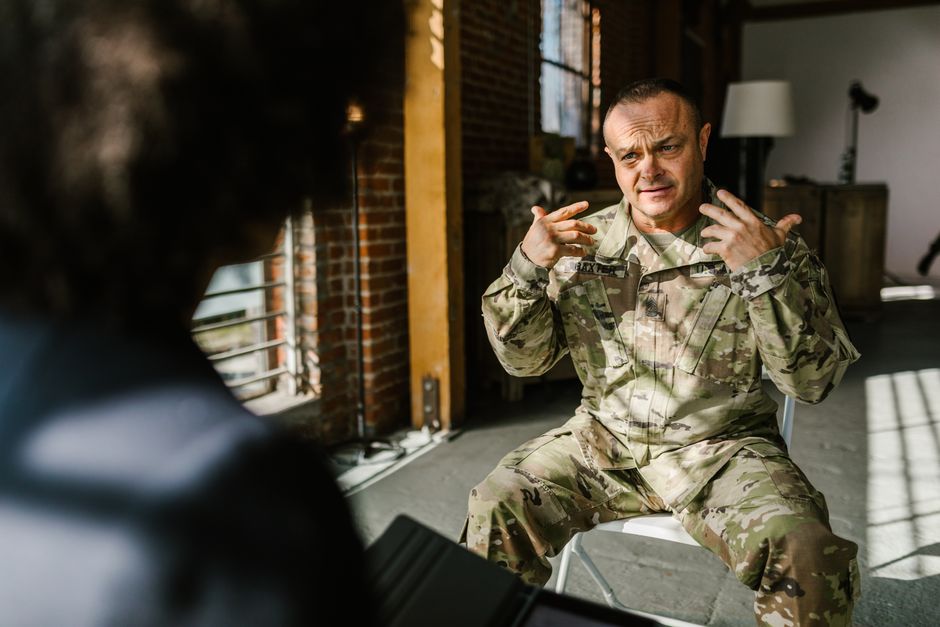
Photo: SHVETS production via Pexels
This article is for general informational purposes only and does not constitute mental health, medical, or clinical advice. If you are in crisis or experiencing a mental health emergency, please contact the 988 Suicide and Crisis Lifeline (call or text 988) or go to your nearest emergency room. Always consult a licensed mental health professional for care specific to your needs.
Recommended Resources
Disclosure: As an Amazon Associate, we earn a small commission from qualifying purchases at no extra cost to you. We only recommend products that genuinely support the topics covered in this article.
- Feeling Good: The New Mood Therapy (~$14), The most clinically studied self-help book for depression, recommended by therapists worldwide as CBT-based self-treatment.
- Depression & Anxiety Therapy Journal (~$10), 8-week guided journal with trigger tracking and mood diary, mirrors the homework your therapist would assign between sessions.