 Kim Davis
Most coverage of this topic presents a false choice. You’ll see charts comparing “medication vs. therapy” like they’re competing products, and the framing implies you pick one, get better, done. That’s not how mental health treatment actually works for most people, and the gap between what gets written and what clinicians actually know is frustrating to watch.
Here’s what I’ve seen consistently, working alongside psychiatrists and therapists for years: the real question isn’t which one “wins.” It’s which one fits this person, this diagnosis, this moment in their life. And sometimes the answer is both. Sometimes it’s neither and you need to stabilize housing first. The treatment decision is messier than any comparison chart suggests.
That said, the comparison is still worth making carefully. Because when you walk into a primary care office at your wit’s end, you’ll often be handed a prescription within 15 minutes. Whether that’s the right call depends on things nobody asked you about.
- Medication typically shows symptom relief in 2-8 weeks; therapy results often take 12-20 sessions to solidify.
- For moderate-to-severe depression, combination treatment outperforms either alone by roughly 20-30% on symptom reduction.
- CBT has roughly equivalent long-term outcomes to antidepressants for mild-to-moderate depression, with lower relapse rates after stopping.
- Therapy costs $100-$300 per session without insurance; SSRIs average $10-$45/month generic, but add psychiatry visits on top.
- Anxiety disorders, in particular, respond very well to therapy alone; medication without therapy often requires indefinite continuation.
What Each One Actually Does
Medication works on neurochemistry. That’s not a metaphor. SSRIs like sertraline (Zoloft) and escitalopram (Lexapro) increase serotonin availability at synapses. SNRIs like venlafaxine hit serotonin and norepinephrine. Benzodiazepines slow central nervous system activity fast. What medication does well: it lowers the floor. It takes the acute edge off. When someone is so anxious they can’t leave their apartment, or so depressed they can’t get out of bed, medication can create enough stability that other interventions become possible.
What it doesn’t do: teach you anything. It doesn’t change the thought patterns driving the anxiety. It doesn’t help you recognize that your panic attacks follow a specific trigger sequence. You stop the medication, and for many conditions, the underlying vulnerability is still there.
Therapy, by contrast, is skill acquisition and pattern recognition under guided conditions. A well-trained CBT therapist is essentially teaching you to catch distorted thinking in real time, examine it, and respond differently. Exposure-based work for phobias or OCD builds tolerance through repeated, structured contact with fear. DBT for borderline personality disorder develops an entirely new emotional regulation toolkit. These are things medication cannot do. They’re also things that take time and require you to do work between sessions, which, honestly, a lot of people don’t budget for emotionally when they sign up.
The Numbers Behind the Decision
Helpful resource: Maybe You Should Talk to Someone by Lori Gottlieb is a top-rated option for this. (As an Amazon Associate this site earns from qualifying purchases.)
Let me put some real figures on the table, because vague cost comparisons are useless.
| Treatment | Typical Cost (No Insurance) | With Insurance | Timeline to Effect | Relapse Risk After Stopping |
|---|---|---|---|---|
| Generic SSRI (e.g., sertraline 100mg) | $10-$45/month | $0-$10 copay | 4-8 weeks | High without tapering plan |
| Brand-name antidepressant (e.g., Trintellix) | $400-$500/month | $30-$60 copay | 4-8 weeks | High without tapering plan |
| Weekly CBT (private pay) | $100-$300/session | $20-$60 copay | 12-20 sessions | Lower; skills persist |
| Psychiatrist visit (initial) | $300-$500 | $30-$80 copay | One visit | N/A |
| Psychiatrist visit (follow-up) | $150-$250 | $20-$60 copay | N/A | N/A |
| Combined therapy + medication | $200-$500+/month | Varies significantly | 6-12 weeks for initial effect | Lowest overall |
A few things that table can’t capture: most people on medication still need psychiatry visits every 4-12 weeks to manage dosing. That cost is separate from the prescription. And “12-20 sessions of CBT” assumes weekly attendance and a therapist who’s actually competent at CBT, not just someone who lists it as one of 14 modalities on their Psychology Today profile. (Speaking of which, Psychology Today’s therapist directory is one of the better places to filter by specialty and insurance, and you can specifically search for therapists trained in a particular modality.)
Diagnosis Changes Everything
How does therapy work? | BBC Ideas · BBC Ideas on YouTube
This is where I push back hardest on generic comparisons. The “medication vs. therapy” framing assumes they’re interchangeable, that you’re treating some undifferentiated “mental health problem.” You’re not.
For schizophrenia and bipolar I disorder: antipsychotics and mood stabilizers aren’t optional for most people. Therapy is a powerful adjunct but it’s not a substitute. Someone mid-manic episode doesn’t need a thought record.
For OCD: Exposure and Response Prevention (ERP) therapy has the strongest evidence base. SSRIs help, and combination often works better, but if you try medication without ERP you’re likely undertreating. I’ve seen this mistake made repeatedly, including by well-meaning general practitioners who just don’t know the OCD literature.
For PTSD: Trauma-focused therapies like Prolonged Exposure and CPT have robust evidence. Medication can help manage symptoms, especially sleep and hyperarousal, but it doesn’t process trauma. It manages the noise around it.
For mild-to-moderate depression or generalized anxiety: this is where the evidence most clearly supports therapy as a first-line option with comparable or better long-term outcomes. A 2023 meta-analysis in World Psychiatry (Cuijpers et al.) found CBT produced similar remission rates to antidepressants for depression, with lower relapse rates at 12-month follow-up.
Here’s three worked examples that reflect patterns I’ve seen in practice:
Person with moderate depression, no prior treatment → tried 12 weeks of weekly CBT first → 60% reduction in PHQ-9 score; no medication needed. This is actually more common than people expect.
Person with severe depression and inability to engage in sessions → started escitalopram 10mg, titrated to 20mg over 6 weeks, added therapy at week 8 → functional improvement sufficient to participate meaningfully in CBT; both continued for 9 months.
Person with panic disorder → offered benzodiazepines by PCP → took them for 6 months, felt dependent, stopped therapy “because the pills helped” → symptoms returned after taper. Restarted with ERP-trained therapist, no medication → panic-free at 6-month follow-up. This third path is the one I worry about most, and it’s depressingly common.
The Case For Starting With Therapy (And When It’s Wrong)
I’ll be direct: if you have access to a competent therapist and your symptoms aren’t debilitating enough to prevent you from engaging, starting with therapy is often the smarter long-term move. You’re building capacity. Medication, for many conditions, buys you time. Therapy is the work.
The counterargument isn’t wrong: waiting 12-20 sessions for meaningful improvement while suffering is a real cost. And medication is genuinely faster for symptom reduction in the early weeks.
But here’s the thing most people don’t consider. When you stop medication without having done therapy, the relapse rate for depression is around 50% within a year, higher for subsequent episodes. When CBT is completed, relapse rates drop closer to 20-30% over the same window. You are much more likely to stay well after stopping a therapy course than after stopping medication alone.
Where therapy-first is the wrong call: psychosis, active suicidality requiring immediate stabilization, severe eating disorders with medical compromise, or symptoms so acute that the person genuinely cannot engage. In those situations, medication (or inpatient care) isn’t just appropriate. It’s urgent.
If you’re not sure what level of care you need, SAMHSA’s treatment locator at findtreatment.gov can help identify local resources by level of intensity, including crisis services, outpatient, and intensive outpatient programs.
Sources
- Cuijpers et al. (2023): World Psychiatry meta-analysis comparing CBT and antidepressants for depression outcomes and relapse rates.
- NIMH: Mental Health Medications: Overview of medication classes, effects, and evidence by condition.
- NICE Guidelines for Depression (2022): UK clinical guidelines with stepped-care model and treatment sequencing recommendations.
- APA Clinical Practice Guideline for PTSD: Strongly recommends trauma-focused therapy over medication as first-line PTSD treatment.
- SAMHSA Treatment Locator: Free, government-maintained directory for mental health and substance use services by location.
One last thing. If you’ve been in therapy for months and feel stuck, or you’ve been on medication for a year and still feel lousy, that’s not evidence that treatment doesn’t work. It may be evidence that the specific treatment, or the specific provider, isn’t the right fit. Switching therapists or medications is normal, not failure. A good therapist will tell you that themselves. If yours doesn’t, that tells you something too.
Some links in this article may be affiliate links. If you purchase through them, this site may earn a small commission at no extra cost to you. Recommended resources include CBT workbooks like David Burns’s Feeling Good: The New Mood Therapy and mindfulness tools like Jon Kabat-Zinn’s Full Catastrophe Living, both of which have real evidence behind them and are worth having alongside, not instead of, professional care.
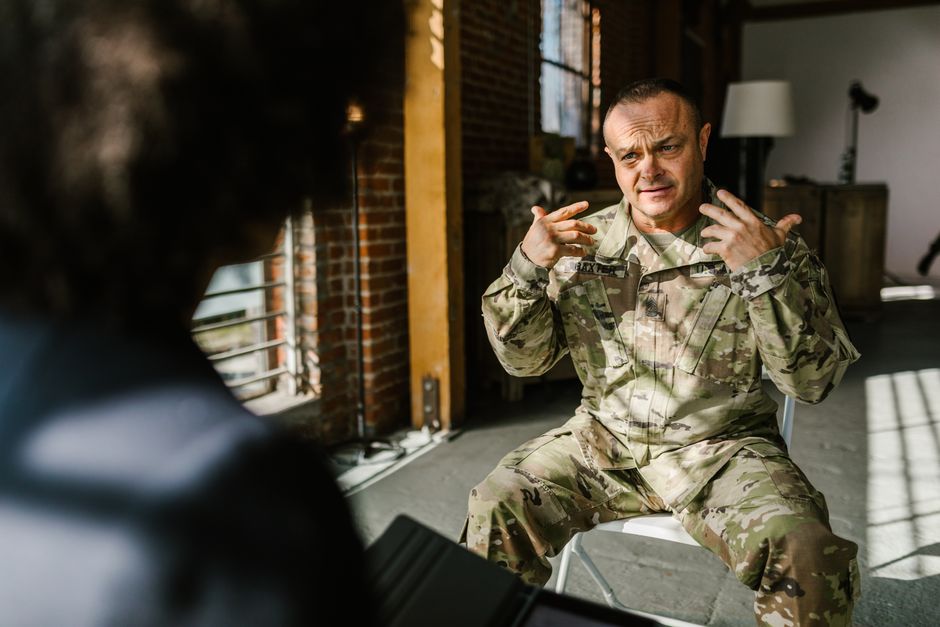
Photo: SHVETS production via Pexels
This article is for general informational purposes only and does not constitute mental health, medical, or clinical advice. If you are in crisis or experiencing a mental health emergency, please contact the 988 Suicide and Crisis Lifeline (call or text 988) or go to your nearest emergency room. Always consult a licensed mental health professional for care specific to your needs.
Recommended Resources
Disclosure: As an Amazon Associate, we earn a small commission from qualifying purchases at no extra cost to you. We only recommend products that genuinely support the topics covered in this article.
- Feeling Good: The New Mood Therapy (~$14), The most clinically studied self-help book for depression, recommended by therapists worldwide as CBT-based self-treatment.
- Depression & Anxiety Therapy Journal (~$10), 8-week guided journal with trigger tracking and mood diary, mirrors the homework your therapist would assign between sessions.