 Alex Morgan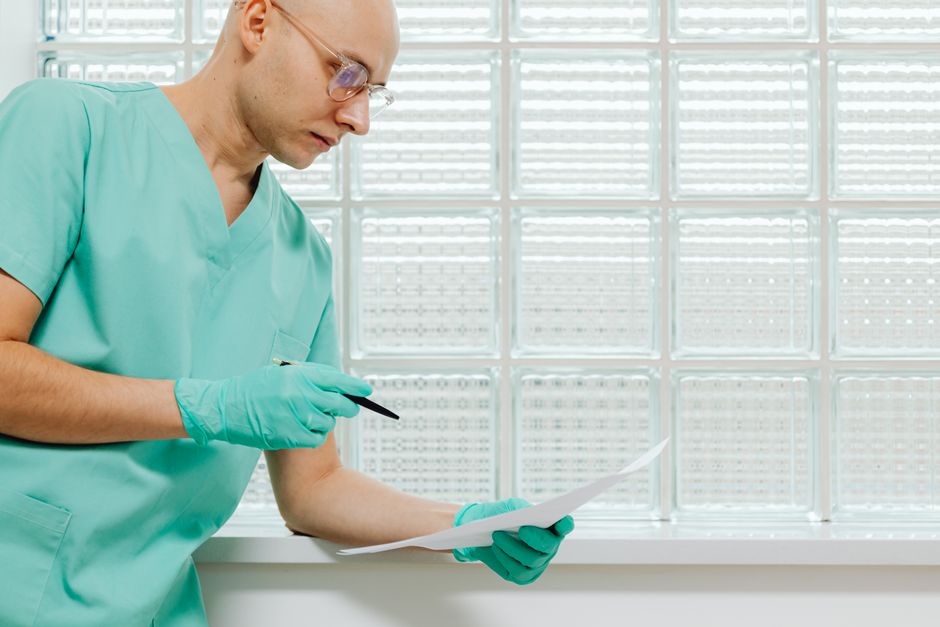
Most people who end up in a psychiatrist’s office didn’t plan to be there. They spent months, sometimes years, trying to manage things on their own, or they finally got referred by a primary care doctor who said, honestly, “this is beyond what I can help with from here.” If that’s where you are right now, I want you to know: that referral isn’t a failure. It’s a door.
Medication management with a psychiatrist is one of those phrases that sounds more intimidating than it actually is. You might be wondering whether it means you’ll be on pills forever, or whether a psychiatrist is just going to spend fifteen minutes with you and hand you a prescription. Those fears are real, and they’re worth taking seriously. They’re also, in most cases, not what actually happens.
Here’s what I tell people who are about to have their first psychiatric appointment: this is going to be slower and more collaborative than you expect. A good psychiatrist isn’t rushing to prescribe. They’re building a picture of your history, your symptoms, your physical health, what you’ve already tried, and what your life actually looks like day to day. The prescription, if it comes, comes out of that picture.
- Medication management visits are typically 15-30 minutes; initial evaluations run 45-90 minutes.
- Most psychiatric medications take 2-8 weeks to show meaningful effect, patience is genuinely required.
- Psychiatrists adjust doses based on symptom response, not fixed timelines; expect 2-4 follow-ups in the first year.
- Telepsychiatry, available in most states as of 2026, has significantly expanded access for people in rural or underserved areas.
- Stopping psychiatric medication abruptly can cause withdrawal or relapse; always consult before changing your dose.
What Medication Management Actually Involves
Let me clear up a misconception I held myself for years before working alongside clinical teams. I assumed “medication management” was code for “quick prescription refill.” I thought psychiatrists were essentially glorified prescription pads. I was wrong, and understanding why matters.
Medication management is an ongoing clinical relationship. Your first appointment, called an intake or psychiatric evaluation, typically runs 45 to 90 minutes. The psychiatrist isn’t just listing symptoms; they’re ruling out physical causes, asking about your family history (psychiatric conditions have strong genetic components), assessing whether what looks like depression might actually be the depressive phase of bipolar disorder, and checking whether current medications for other conditions could be contributing to how you feel. That distinction matters enormously because the wrong medication for bipolar disorder, specifically an antidepressant given without a mood stabilizer, can trigger a manic episode.
After that initial evaluation, follow-up appointments are usually 15 to 30 minutes. The rhythm varies: every 2 to 4 weeks when you’re first starting a medication, then spacing out to every 1 to 3 months once things are stable. These visits exist to track side effects, assess whether the medication is working, and adjust the dose if needed.
One detail that only becomes obvious after you’ve sat in on a few of these appointments: the psychiatrist is paying close attention to what you don’t say. Patients often minimize side effects because they’re afraid the doctor will take away a medication that’s helping. A good psychiatrist knows this and asks specific questions: “Are you sleeping more or less than usual?” “Has your appetite changed?” “Any muscle tension or restlessness?” That specificity is the clinical skill at work.
How Psychiatric Medications Get Chosen
Helpful resource: The Anxiety and Worry Workbook by Clark and Beck is a top-rated option for this. (As an Amazon Associate this site earns from qualifying purchases.)
You might be wondering whether there’s a test that tells your psychiatrist exactly which medication to prescribe. The honest answer is: sort of, but not really.
Genetic pharmacology testing, products like GeneSight or Genomind, can tell a psychiatrist how your body metabolizes certain drugs. These tests look at liver enzymes like CYP2D6 and CYP2C19, which affect how quickly you break down medications like SSRIs, tricyclics, and some antipsychotics. Insurance coverage for this testing is inconsistent in 2026, often running $300 to $2,000 out of pocket if not covered. In my experience watching clinicians use these results, they’re most useful for patients who’ve had unexpected reactions to medications in the past, not as a first-line tool for everyone.
More often, the initial medication choice is based on your specific diagnosis, symptom profile, other health conditions, what you’ve tried before, and practical factors like your insurance formulary. There’s real science here, but there’s also clinical judgment. The research on antidepressants, for instance, consistently shows that the difference in efficacy between most SSRIs is small; tolerability and side effect profile often drive the choice more than raw effectiveness data.
Here’s a worked example from what I’ve seen in practice:
A 34-year-old woman with moderate generalized anxiety and a history of GI sensitivity is evaluated. Her psychiatrist considers an SSRI, but given her GI concerns, starts her on buspirone instead of sertraline. After 6 weeks at 15mg twice daily, her anxiety scores on the GAD-7 drop from 14 (moderate) to 7 (mild). They hold the dose. Three months later, she’s stable enough to taper follow-ups to every 90 days.
The Cost Reality (Because Nobody Talks About This Clearly)
Psychiatrists are among the highest-paid specialists in medicine, and their appointments are priced accordingly. Here’s a realistic look at current costs as of July 2026:
| Visit Type | Cash Pay Range | With Insurance (Copay) | Telehealth Range |
|---|---|---|---|
| Initial Evaluation (60-90 min) | $300 - $500 | $30 - $100 | $150 - $350 |
| Follow-Up Visit (15-30 min) | $100 - $250 | $20 - $75 | $75 - $175 |
| Medication Review Only | $75 - $150 | $15 - $50 | $50 - $100 |
| Sliding Scale (community mental health) | $0 - $80 | Varies | $0 - $60 |
A few things to know. First, roughly half of psychiatrists in the U.S. don’t accept insurance at all, according to data from the American Medical Association. That’s not comfortable news, but it’s true. Second, the expansion of telepsychiatry platforms like Talkiatry, Cerebral (with its revised model post-2023 regulatory scrutiny), and Done has genuinely increased access and lowered costs for many people. Third, community mental health centers operate on sliding scales based on income, and they’re underutilized. If cost is a barrier, the National Alliance on Mental Illness (NAMI) has a helpline (1-800-950-6264) that can help you locate local resources.
Starting a Medication: The Actual Timeline
This is where most people get frustrated, and honestly, the frustration is legitimate. Psychiatric medications are not like antibiotics. You don’t take them for a week and know they worked.
SSRIs and SNRIs typically take 4 to 8 weeks to show their full antidepressant effect. Mood stabilizers like lithium need regular blood monitoring to reach therapeutic levels safely. Antipsychotics used for depression augmentation, like aripiprazole or quetiapine, can take 2 to 4 weeks just to assess tolerability. The waiting is hard. It’s one of the most underacknowledged parts of psychiatric care.
What helps during this window: keeping a symptom journal (something as simple as the Mood Tracker & Gratitude Journal on Amazon works well for this, and yes, the site may earn a small commission on that link), being honest with your psychiatrist about side effects in the first two weeks even when they feel manageable, and not making major life decisions based on how you feel at week two of a new medication.
Another worked example:
A 48-year-old man is started on 50mg sertraline for depression. At week two, he reports feeling “activated” and slightly more anxious. His psychiatrist doesn’t panic. They discuss it, confirm he’s not having suicidal thoughts, and hold the dose. By week five, the activation has resolved and his PHQ-9 score drops from 16 to 9. They increase to 100mg and see continued improvement by week eight.
That’s textbook. Not every case goes that cleanly, but the structure of patience, communication, and incremental adjustment is consistent.
When Medication Isn’t Enough on Its Own
Here’s a clear stance I’ll take: medication alone is rarely the complete answer for most psychiatric conditions. This isn’t an opinion that dismisses medication. It’s the opposite. Medication can make therapy possible when someone was too depressed to engage with it before. The two work best together.
Research published in JAMA Psychiatry consistently shows that combination treatment (medication plus psychotherapy, especially CBT for depression and anxiety) produces better long-term outcomes than medication alone. For conditions like OCD, therapy (specifically ERP, exposure and response prevention) is considered a first-line treatment, with medication as an adjunct. For severe bipolar I disorder, medication isn’t optional. The evidence base really does vary by diagnosis.
If you’re in a situation where you’re unsure whether you need medication, therapy, or both, a psychiatrist evaluation doesn’t commit you to anything. It gives you information. And if you’re in crisis right now, please reach out to the 988 Suicide and Crisis Lifeline by calling or texting 988.
One practical note: some people find that starting medication actually frees up enough mental bandwidth to get more out of a CBT workbook between sessions. If that describes you, something like Mind Over Mood by Greenberger and Padesky is the most clinically backed self-help CBT resource I’ve seen used effectively alongside psychiatric care (commission disclosure applies here too).
Sources
- American Medical Association (AMA): Reports on psychiatrist insurance participation rates and workforce data.
- National Alliance on Mental Illness (NAMI): Community resource finder and medication information for patients.
- Cipriani et al. (2018), The Lancet: Large-scale meta-analysis of 21 antidepressants covering 522 trials and 116,000+ participants; found all were more effective than placebo with varying tolerability profiles.
- Substance Abuse and Mental Health Services Administration (SAMHSA): National survey data on mental health treatment access and barriers.
- 988 Suicide and Crisis Lifeline: Crisis intervention and referral services available 24/7 by call or text.
Photo: www.kaboompics.com via Pexels
This article is for general informational purposes only and does not constitute mental health, medical, or clinical advice. If you are in crisis or experiencing a mental health emergency, please contact the 988 Suicide and Crisis Lifeline (call or text 988) or go to your nearest emergency room. Always consult a licensed mental health professional for care specific to your needs.
Recommended Resources
Disclosure: As an Amazon Associate, we earn a small commission from qualifying purchases at no extra cost to you. We only recommend products that genuinely support the topics covered in this article.
- Feeling Good: The New Mood Therapy (~$14), The most clinically studied self-help book for depression, recommended by therapists worldwide as CBT-based self-treatment.
- Depression & Anxiety Therapy Journal (~$10), 8-week guided journal with trigger tracking and mood diary, mirrors the homework your therapist would assign between sessions.