 Kim Davis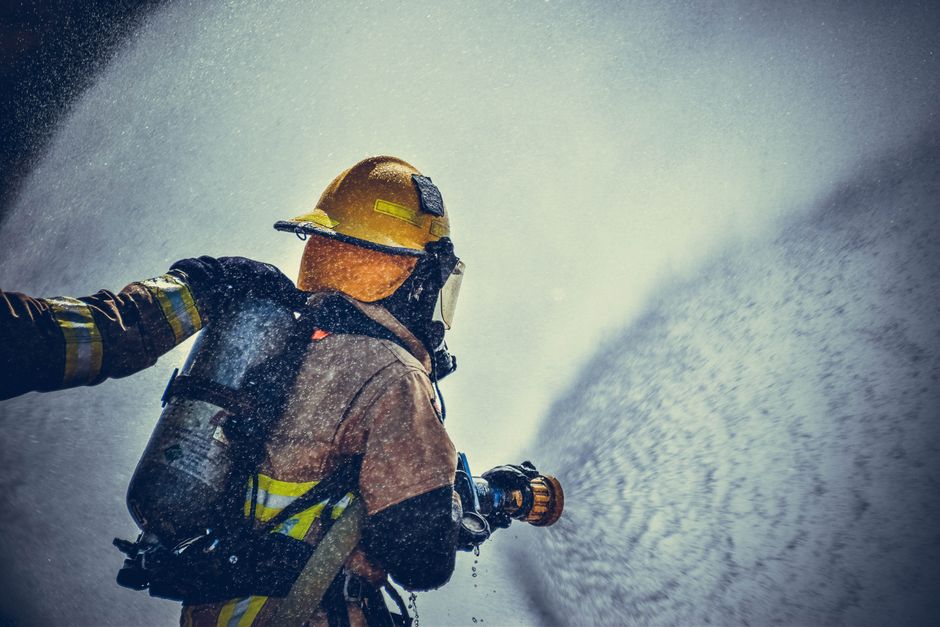
Most firefighters will tell you they’ve pulled a colleague out of a burning building before they’ve ever suggested that same colleague see a therapist. That tells you everything about the culture.
I’ve spent years working alongside first responders, ER nurses, paramedics, and law enforcement officers who carry weight that most people genuinely cannot picture. The calls don’t stop replaying. The close calls don’t just “fade with time.” And the old coping strategies, the dark humor, the “just push through it,” the third beer on a Tuesday, stop working somewhere around year eight of the job. What I’ve watched happen after that is why this article exists.
Let’s get into what actually helps, what’s specific to this population, and how to find care that doesn’t waste your time or your limited emotional energy.
Why Standard Therapy Often Misses the Mark for First Responders
Here’s the thing most clinicians won’t say out loud: a lot of therapists are simply not equipped to work with first responders, and a well-meaning but naive therapist can actually make things worse.
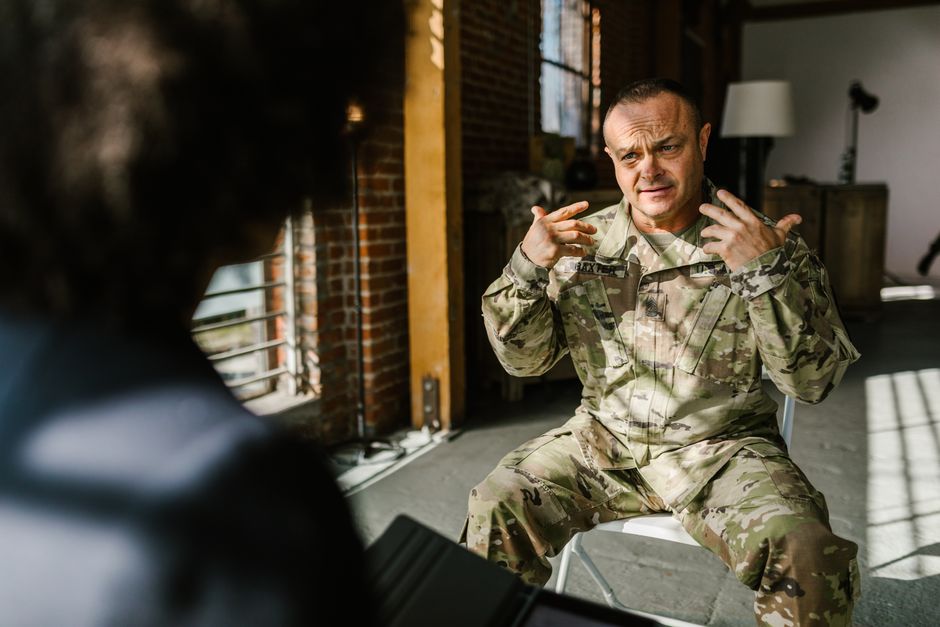
Picture a paramedic with 12 years on the job sitting across from a therapist who, in the second session, says something like “that must have been so scary for you.” The paramedic shuts down completely, never goes back, and tells every coworker that therapy is useless. I’ve seen this exact scenario play out. Not metaphorically. Multiple times.
Dr. Ellen Kirschman, a police psychologist with over 40 years of experience working with law enforcement and author of “I Love a Cop,” describes it plainly: “First responders are trained to suppress emotion on the job because it keeps them and their partners alive. When they walk into a therapy office and are asked to immediately emote, it violates everything they’ve been conditioned to do.”
That’s not a character flaw. That’s training doing exactly what it was designed to do.
What first responders often need is a therapist who leads with the practical before the emotional, who doesn’t pathologize hypervigilance as dysfunction when it’s actually been a survival tool, and who understands what “a bad shift” actually involves. The therapeutic relationship has to be built on credibility before it can be built on vulnerability.
Get connected with a clinician who lists first responder experience specifically by searching Psychology Today’s therapist directory and filtering by specialty.
The Therapies That Actually Work (and the Evidence Behind Them)
Helpful resource: The Mindfulness and Acceptance Workbook for Anxiety is a top-rated option for this. (As an Amazon Associate this site earns from qualifying purchases.)
Not all therapy modalities are equal for trauma, and the research on this is pretty settled at this point.
EMDR (Eye Movement Desensitization and Reprocessing) consistently shows up as one of the most effective treatments for first responder PTSD. A 2021 meta-analysis published in the Journal of Anxiety Disorders reviewed 26 randomized controlled trials and found EMDR produced significant reductions in PTSD symptom severity, often in fewer sessions than traditional talk therapy. For someone who can’t take six months off the job to do deep therapeutic work, that matters.
CPT (Cognitive Processing Therapy) was originally developed for combat veterans and sexual assault survivors, but the research on its effectiveness with law enforcement and firefighters is solid. Dr. Patricia Resick, who developed CPT at the University of Missouri, has described the therapy’s core goal as helping people “get unstuck” from thoughts like “I should have done more” or “I’m broken.” That particular thought pattern is epidemic among first responders, especially after line-of-duty deaths or pediatric calls.
Prolonged Exposure (PE) is another well-supported option, though it tends to feel more intense in the short term because it involves deliberately revisiting traumatic memories in a controlled setting. Some first responders find it the most effective precisely because it doesn’t feel like “just talking.” Others find it too much while still on active duty. Honest answer: it depends on the person and the timing.
What about medication? It can help, especially for acute symptoms like hyperarousal and insomnia that are making it impossible to function. But in my experience, medication alone is rarely enough. It’s most effective when it takes enough edge off to make therapy actually accessible.
Worked example: A firefighter with 9 years on the job, after a fatal structure fire involving a child, started EMDR with a clinician trained in first responder trauma. After 12 sessions over four months, his PCL-5 score (a standardized PTSD checklist) dropped from 54 to 28. He didn’t “cure” anything, but he went from nightly nightmares to roughly one per week, and he stayed on the job.
Learn more about trauma-focused therapy types from your department’s Employee Assistance Program, or ask a potential therapist directly which modalities they use and why.
The Access Problem Nobody Talks About Enough
Cost and stigma are the two biggest barriers. The stigma piece is real and I won’t pretend otherwise, but the cost piece is something you can actually do something about right now.
Many departments have EAPs (Employee Assistance Programs) that offer free sessions, typically 6 to 8 per year. The catch is that EAP therapists are a mixed bag. Some are excellent; some are generalists who’ve never worked with anyone in emergency services. Use the free sessions strategically, but don’t assume the EAP therapist is your best long-term option.
Several states now have programs specifically for first responder mental health. The First Responder Support Network (FRSN) runs residential programs at no cost to participants. Safe Call Now (1-206-459-3020) is a 24-hour confidential line specifically for public safety employees and their families. These aren’t therapy replacements, but they’re real entry points.
For crisis moments, the 988 Suicide and Crisis Lifeline now has a dedicated first responder support option. Dial 988, then press 1 for veterans (it’s being expanded to include first responders more broadly) or stay on the line and tell the counselor your background.
On the self-support side, books like “Bulletproof Spirit” by Dan Willis (written by a police commander with 30 years on the force) and CBT-based workbooks like the PTSD Workbook by Mary Beth Williams (Amazon link, the site may earn a commission) are genuinely useful between sessions, not instead of them.
Worked example: A dispatch supervisor who couldn’t afford private therapy at $175 per session used her department’s EAP for 6 sessions to stabilize, then applied to a state grant program in her region that covered 12 additional sessions with a trauma specialist. Total out-of-pocket cost over seven months: $0. It took her three phone calls and about 45 minutes of paperwork.
Save your department’s EAP number and the Safe Call Now line in your phone today, even if you don’t need it yet.
Peer Support: Underrated, Underused
Peer support programs, where trained first responders provide support to colleagues after critical incidents, are not therapy. But they’re often the bridge that gets someone to therapy.
Dr. Richard Gist, an applied social psychologist who has spent decades studying first responder crisis intervention, puts it this way: “The most important thing after a critical incident is not a debrief. It’s connection. Knowing someone who’s been in similar situations is willing to sit with you.”
The International Association of Chiefs of Police and the National Fallen Firefighters Foundation have both invested heavily in peer support training frameworks. Many larger departments now have certified peer support teams, but utilization rates are still frustratingly low. Part of that is stigma, part of it is that people don’t know the resource exists.
If your department has one, know who’s on it. If it doesn’t, the National Volunteer Fire Council has a free peer support training curriculum available to departments.
Worked example: After a mass casualty event, a mid-size police department activated their peer support team within 48 hours. Officers who engaged with peer support in the following two weeks were 40% more likely to follow through with a formal therapy referral within 60 days, compared to those who didn’t, according to the department’s own tracking data.
Check whether your department has a certified peer support team and introduce yourself before you need them.
Sources
- Kirschman, E. (2018). I Love a Cop: What Police Families Need to Know (4th ed.). Guilford Press. Foundational text on law enforcement psychological culture and family impact.
- Ho, F.Y.Y. et al. (2021). “The efficacy of EMDR for PTSD: A meta-analysis of randomized controlled trials.” Journal of Anxiety Disorders. 26-trial meta-analysis showing significant symptom reduction.
- Resick, P.A. & Schnicke, M.K. (1993). Cognitive Processing Therapy for Rape Victims. Sage Publications. Original CPT framework, since extended to trauma in occupational settings.
- National Fallen Firefighters Foundation: Firefighter behavioral health programming and peer support resources.
- Safe Call Now: 24/7 confidential crisis line specifically for public safety personnel and families.
The culture is changing, slowly. I’ve watched departments that wouldn’t have acknowledged mental health a decade ago now fund peer support teams and mandate post-incident check-ins. That’s real progress. But it doesn’t happen fast enough for the person sitting in their car after a shift, not ready to go inside yet.
If that’s where you are right now, you’ve already done something useful today. You read this. That’s a real start.
This article is for general informational purposes only and does not constitute mental health, medical, or clinical advice. If you are in crisis or experiencing a mental health emergency, please contact the 988 Suicide and Crisis Lifeline (call or text 988) or go to your nearest emergency room. Always consult a licensed mental health professional for care specific to your needs.
Recommended Resources
Disclosure: As an Amazon Associate, we earn a small commission from qualifying purchases at no extra cost to you. We only recommend products that genuinely support the topics covered in this article.
- Feeling Good: The New Mood Therapy (~$14), The most clinically studied self-help book for depression, recommended by therapists worldwide as CBT-based self-treatment.
- Depression & Anxiety Therapy Journal (~$10), 8-week guided journal with trigger tracking and mood diary, mirrors the homework your therapist would assign between sessions.