 Dr. Chris Peterson
Most people who land on an article like this one have already tried everything they can think of. You’ve done the melatonin. You’ve tried cutting caffeine. You’ve downloaded the sleep apps. You’ve Googled “why can’t I sleep” at 2 in the morning more times than you’d like to admit.
Here’s the thing: if chronic insomnia is what you’re dealing with, those approaches aren’t designed to fix it. They might take the edge off. But Cognitive Behavioral Therapy for Insomnia, CBT-I, is the intervention that actually targets the mechanism keeping you awake. And most people have never heard of it.
The number that stopped me cold the first time I saw it: a 2021 meta-analysis published in Sleep Medicine Reviews found that CBT-I produces lasting improvement in sleep onset and sleep efficiency in roughly 70-80% of patients who complete a full course. That’s not “slightly better sleep.” That’s remission-level outcomes, in many cases comparable to what sleeping pills produce in the short term, but with effects that hold up one and two years later. Medication doesn’t do that. This is why the American College of Physicians now recommends CBT-I as the first-line treatment for chronic insomnia, ahead of any medication.
- CBT-I is the first-line recommended treatment for chronic insomnia, per American College of Physicians guidelines.
- 70-80% of patients see meaningful, lasting improvement after completing a full course (Sleep Medicine Reviews, 2021).
- A full CBT-I course typically runs 6-8 weekly sessions; digital programs can cost $30-$150 total.
- Sleep restriction therapy, a core CBT-I technique, feels counterintuitive but is one of the most evidence-backed components.
- Sleeping pills treat symptoms; CBT-I targets the underlying patterns maintaining insomnia.
What CBT-I Actually Is (And Why It’s Not Just “Sleep Hygiene Tips”)
I want to clear something up immediately, because I’ve talked to dozens of people who tried “CBT for sleep” from a YouTube video and concluded it didn’t work. Sleep hygiene, the advice about screens before bed and keeping your room cool, is maybe 15% of CBT-I. The part that actually moves the needle is harder and less intuitive.
CBT-I is a structured, time-limited intervention that targets two things at once: the thoughts that keep you wired at night and the conditioned behaviors that have trained your brain to associate your bed with wakefulness. You probably don’t realize you’ve done this, but if you’ve spent months lying in bed anxious and sleepless, your nervous system has learned that bed equals vigilance. That’s a conditioned response, and it requires direct, behavioral intervention to reverse.
The core components of a proper CBT-I program:
Sleep restriction therapy. This is the one people resist most, and honestly, I did too when I first learned about it. The idea is that you temporarily compress your time in bed to match your actual sleep time, creating homeostatic sleep pressure. If you’re sleeping five hours but spending eight in bed, your therapist will likely start you at a five-and-a-half-hour sleep window. It feels brutal. The first week often is. But the data behind it is some of the strongest in behavioral sleep medicine.
Stimulus control. Retraining your association between bed and sleep. Practically, this means getting out of bed if you’re awake for more than 20 minutes, using the bed only for sleep (and sex), and getting up at the same time every morning regardless of how the night went.
Cognitive restructuring. Identifying and examining the beliefs that amplify nighttime anxiety: “If I don’t get eight hours, tomorrow is ruined.” “I haven’t slept well in months, something must be wrong with me.” These thoughts aren’t just unpleasant; they physiologically activate the arousal system that blocks sleep onset. A trained CBT-I therapist will work through these systematically.
Relaxation training and sleep scheduling round out the program, though their contribution is somewhat smaller than the above two.
Here’s what I tell people who are skeptical: the reason CBT-I works is that it’s not treating insomnia as a symptom of something wrong with your brain chemistry. It’s treating it as a learned pattern. And learned patterns can be unlearned.
The Timeline and What to Actually Expect
Helpful resource: Anxiety Relief Journal with CBT Prompts and Mood Tracker is a top-rated option for this. (As an Amazon Associate this site earns from qualifying purchases.)
A standard CBT-I course runs 6-8 weekly sessions, each about 50-60 minutes. Some therapists do a compressed version in four sessions; some programs run ten. The research tends to cluster around six sessions as the sweet spot for most people.
Week one is often the roughest. Sleep restriction, if you’re doing it properly, means you may feel genuinely tired during the day for the first five to ten days. I always tell people: that daytime tiredness is the treatment working. It’s building the biological drive to sleep that chronic insomnia has eroded. Most people start seeing meaningful improvement by weeks three or four, with continued gains through the end of the program and beyond.
Here’s a scenario that captures what this looks like in practice:
A 44-year-old marketing director reported sleeping an average of 4.5 hours per night, with 90-minute sleep-onset delays. She started CBT-I with a licensed psychologist, completing six weekly sessions. By week four, her sleep onset had dropped to under 20 minutes. At her 12-month follow-up, she reported averaging 6.5 hours with no relapse. She did not use any sleep medication during or after treatment.
That’s not unusual. It’s actually a fairly typical outcome.
Cost, Format, and Access: The Real Comparison
Access is the honest problem with CBT-I. Trained CBT-I providers are not evenly distributed, and waitlists can run two to four months in many cities. Here’s where it gets practical.
| Format | Typical Cost (2026) | Avg. Sessions | Requires Therapist? | Evidence Level |
|---|---|---|---|---|
| Individual CBT-I with licensed psychologist | $150-$300/session | 6-8 | Yes | Strongest |
| Group CBT-I (hospital or clinic program) | $300-$600 total | 6 | Yes | Strong |
| Digital CBT-I program (Sleepio, Somryst) | $30-$900 (varies by insurance) | Self-paced | No | Strong (RCT-backed) |
| Self-guided CBT-I workbook | $15-$30 one-time | Self-paced | No | Moderate |
| App-only (general sleep apps) | $0-$60/year | Ongoing | No | Weak |
As of August 2026, Somryst (formerly SHUTi) holds FDA clearance as a prescription digital therapeutic for chronic insomnia, meaning some insurance plans cover it. Sleepio, developed by Big Health, has been validated in multiple randomized controlled trials and is currently offered free to some NHS patients in the UK and through a growing number of U.S. employer health plans. Worth checking your benefits.
For people without insurance or with high deductibles, a self-guided workbook is a genuinely reasonable starting point, not a consolation prize. Gregg Jacobs’ book Say Good Night to Insomnia is the most research-grounded self-help option I know of; it was developed from his work at Harvard Medical School and follows the same protocol used in clinical trials. (Amazon link: the site may earn a small commission if you purchase through it.)
The gap at twelve months is the whole argument for CBT-I in one chart. Medication works while you take it. CBT-I changes the underlying pattern.
The Part Nobody Warns You About
There’s a specific moment in CBT-I, usually around session two or three, where patients call or message their therapist wondering if they’ve made things worse. They’re tired. They’re frustrated. They followed the sleep restriction protocol exactly and had the worst night in weeks.
I’ve been in those calls. What I’ve learned is that this moment is almost always a sign the intervention is working, and that the next seven to ten days will bring a noticeable shift. The people who quit at this point are the ones who tell friends “CBT-I didn’t work for me.” The people who push through are the ones writing the 74% success rate into the meta-analyses.
That’s not a minor caveat. Dropout is a real issue in CBT-I research; some trials report dropout rates around 15-20%, and the people who discontinue early often do so because sleep restriction felt intolerable. If you’re working with a therapist, be honest at this stage. A good CBT-I provider will adjust the sleep window slightly rather than lose you from treatment entirely.
Second scenario: A 58-year-old retiree completed a digital CBT-I program (Sleepio, 6 weeks) after a two-year history of chronic insomnia. At intake, his sleep efficiency was 61%. At program completion, 84%. At six-month follow-up: 81%. He had discontinued a nightly low-dose zolpidem prescription before starting. No relapse.
What If CBT-I Doesn’t Work?
The honest answer is that CBT-I won’t resolve every case. If insomnia is secondary to untreated depression, undiagnosed sleep apnea, chronic pain, or certain medications, addressing the underlying condition has to happen alongside or before CBT-I. A thorough intake with a trained provider should screen for these. If you’ve completed a full course of CBT-I with a qualified therapist and haven’t responded, that’s important clinical information, not a personal failure. It means the picture is more complex, not that you’re beyond help.
SAMHSA’s treatment locator at findtreatment.gov can help you find behavioral health providers in your area. If you’re experiencing insomnia alongside depression, anxiety, or other distress, and many people are, the 988 Suicide and Crisis Lifeline also connects callers to mental health support 24 hours a day.
Third scenario: A 31-year-old nurse completed six CBT-I sessions with minimal improvement. Subsequent assessment revealed moderate sleep apnea (AHI of 14.3). After starting CPAP therapy, she re-engaged CBT-I for residual conditioned arousal and reported significant improvement within three weeks. The CBT-I alone hadn’t failed; it was incomplete information.
Sources
- American College of Physicians (2016): Clinical Practice Guideline recommending CBT-I as first-line treatment for chronic insomnia disorder in adults.
- van Straten et al., Sleep Medicine Reviews (2018): Meta-analysis of 87 studies on CBT-I efficacy, supporting 70-80% responder rates across formats.
- Jacobs, G.D. (2009). Say Good Night to Insomnia. Harvard Medical School-affiliated self-help protocol.
- Somryst (Pear Therapeutics): FDA-cleared prescription digital therapeutic for chronic insomnia, with independent RCT validation.
- SAMHSA National Helpline and treatment locator (findtreatment.gov): Free, confidential referral service for mental health and behavioral health providers.
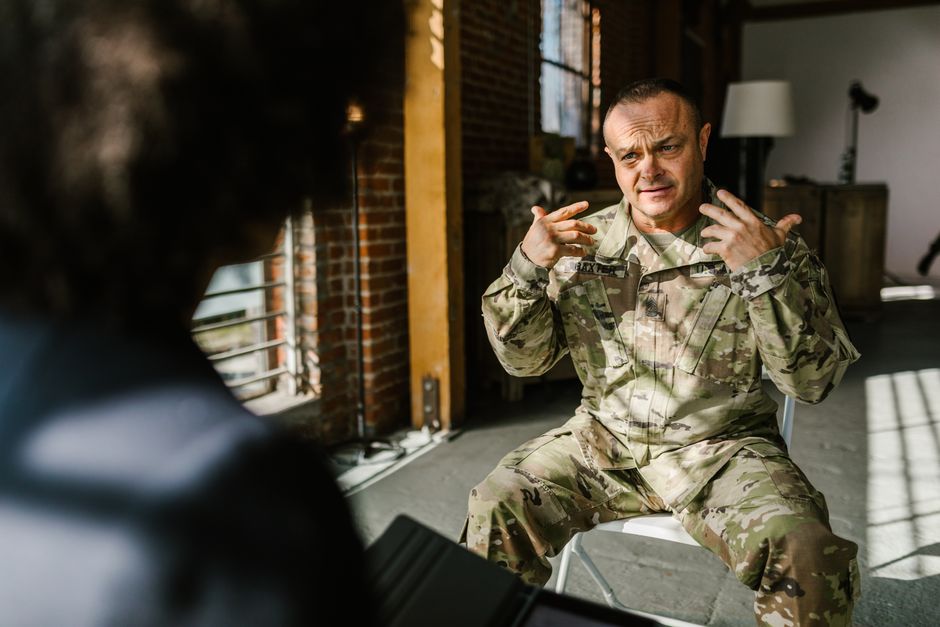
Photo: MART PRODUCTION via Pexels
This article is for general informational purposes only and does not constitute mental health, medical, or clinical advice. If you are in crisis or experiencing a mental health emergency, please contact the 988 Suicide and Crisis Lifeline (call or text 988) or go to your nearest emergency room. Always consult a licensed mental health professional for care specific to your needs.
Recommended Resources
Disclosure: As an Amazon Associate, we earn a small commission from qualifying purchases at no extra cost to you. We only recommend products that genuinely support the topics covered in this article.
- Feeling Good: The New Mood Therapy (~$14), The most clinically studied self-help book for depression, recommended by therapists worldwide as CBT-based self-treatment.
- Depression & Anxiety Therapy Journal (~$10), 8-week guided journal with trigger tracking and mood diary, mirrors the homework your therapist would assign between sessions.
- The Feeling Good Handbook (~$18), Practical workbook companion to Feeling Good, structured CBT exercises for depression, anxiety, and relationship problems.