 Kim Davis
Most people who land on an article like this one have already been sitting with something heavy for a while. Maybe you’ve tried therapy before and it didn’t quite fit. Maybe you’ve heard the phrase “trauma-informed” thrown around and you’re not sure if it means anything specific or if it’s just a buzzword clinicians use to sound more compassionate. Maybe you’re trying to figure out if what you’ve been through counts as “real” trauma. (It probably does. More on that in a minute.)
Here’s what I tell people who come to me with those questions: trauma-informed therapy isn’t a single technique or a specific school of thought. It’s more like a set of principles that shape how a therapist understands and responds to you, principles that change everything about how the work feels, even when the actual interventions look similar to what you’d find in other types of care.
I’ve worked alongside clinical teams for years, helping people find the right therapist and understand what they were walking into. I’ve seen people leave a first session feeling worse than before they arrived, not because the therapist was bad, but because the approach wasn’t calibrated for someone carrying a trauma history. That mismatch matters. A lot.
- Trauma-informed therapy is a framework, not a single technique; it shapes how all care is delivered.
- "Big T" and "small t" trauma both qualify; you don't need a dramatic event to benefit.
- EMDR and Somatic Experiencing have strong research backing for trauma specifically.
- A good trauma-informed therapist will never push you to recount details before you're ready.
- SAMHSA's treatment locator can filter specifically for trauma-specialized providers near you.
What “Trauma-Informed” Actually Means
The term comes largely from SAMHSA’s (Substance Abuse and Mental Health Services Administration) work defining a framework built around six core principles: safety, trustworthiness, peer support, collaboration, empowerment, and cultural sensitivity. That framework was formalized in their 2014 guidance document, and it’s still the standard most clinical training programs reference today.
In practice, a trauma-informed approach means your therapist understands that a lot of behaviors that look like “problems” are actually very logical adaptations to something that happened to you. Hypervigilance, difficulty trusting, emotional numbness, explosive reactions to small things, these aren’t character flaws. They’re responses your nervous system learned because they kept you safe at some point. A trauma-informed clinician won’t try to argue you out of those responses before they understand them.
What it doesn’t mean: your therapist will let you avoid hard conversations indefinitely. There’s a version of this work that tips into endless “processing” without any movement, and that’s not what good trauma-informed care looks like. The goal is stabilization first, then processing, then integration. You’ll often hear that described as a “phase-based” model. It’s less glamorous than it sounds, but it works.
The Difference Between Approaches (and Why It Matters for You)
Helpful resource: Get Out of Your Mind and Into Your Life (ACT Workbook) is a top-rated option for this. (As an Amazon Associate this site earns from qualifying purchases.)
There are several specific therapies that fall under the trauma-informed umbrella. They’re not interchangeable, and choosing the wrong one for your situation is a real thing that happens. Here’s an honest comparison:
| Approach | Best for | Session structure | Evidence level | Typical cost range (US, 2026) |
|---|---|---|---|---|
| EMDR (Eye Movement Desensitization and Reprocessing) | Single-incident trauma, PTSD | Structured protocols, bilateral stimulation | Strong (multiple RCTs) | $150-$250/session |
| CPT (Cognitive Processing Therapy) | Complex trauma, military/assault-related PTSD | 12 structured sessions, homework-focused | Strong (VA-backed research) | $120-$200/session |
| Somatic Experiencing | Body-held trauma, chronic freeze/shutdown | Unstructured, body-sensation focused | Emerging (less RCT data) | $130-$220/session |
| Trauma-Focused CBT (TF-CBT) | Children and adolescents primarily | Includes caregiver involvement | Very strong for its population | $100-$180/session |
| Internal Family Systems (IFS) | Complex/relational trauma, dissociation | Parts-based, flexible pacing | Promising, research growing | $140-$240/session |
A few things to note about this table. First, costs vary a lot by city, and most therapists who take insurance will reduce your out-of-pocket significantly. Second, “evidence level” is a charged topic in the therapy world. Somatic Experiencing has fewer randomized controlled trials partly because it’s harder to standardize for a study, not necessarily because it doesn’t work. I’ve seen it be genuinely transformative for people who tried EMDR first and found the structured protocol too activating. Third, if cost is a barrier, SAMHSA’s treatment locator at findtreatment.gov lets you filter by trauma specialty and sliding-scale availability.
“Do I Actually Have Trauma?”
This is the question I hear most often, and I want to be honest with you: almost everyone who asks it is asking because they’re worried their experience isn’t serious enough to warrant this level of care. They’re comparing themselves to someone who survived something objectively terrible, and feeling like their own history doesn’t measure up.
The clinical distinction between “Big T” and “small t” trauma is genuinely useful here. Big T traumas are what most people think of: combat, sexual assault, serious accidents, natural disasters. Small t traumas are the more chronic, relational wounds that often don’t have a single defining moment. A childhood where love felt conditional. Years in a relationship that slowly eroded your sense of self. A work environment that kept you in a state of constant threat. These don’t usually show up on an intake form, but they absolutely register in the nervous system.
A 2020 study in the Journal of Traumatic Stress found that cumulative “small t” trauma exposure was significantly associated with PTSD symptoms even when no single event met diagnostic criteria. So yes. That counts.
What to Actually Look for in a Therapist
You’re probably wondering how to tell the difference between a therapist who says they’re trauma-informed and one who actually is. I made this mistake myself early on. I assumed any therapist would handle this appropriately. They don’t.
Some things to ask in a consultation call (which most therapists offer free for 15-20 minutes):
Ask what their approach is specifically when a client becomes emotionally overwhelmed in session. A trauma-informed therapist will have a clear answer about grounding techniques, pacing, and the idea that you get to control how fast you move. If they say something vague like “we’d just work through it,” that’s a yellow flag.
Ask if they have specific training in any of the modalities in the table above. “Trauma-informed” as a general orientation is good. Specific training in EMDR, IFS, or CPT means they have structured tools to offer when the work gets hard.
One thing that only people who’ve actually sat with this process know: the intake paperwork at a genuinely trauma-informed practice will ask about your current resources and supports, not just your history and symptoms. What helps you feel safe? Who do you turn to? The absence of that question tells you something.
Psychology Today’s therapist directory (psychologytoday.com/us/therapists) lets you filter specifically for trauma specialization, EMDR training, and insurance accepted. It’s not perfect but it’s still the most reliable starting point I’ve found for most people.
When Trauma-Informed Therapy Gets Hard
Real talk: this work can temporarily make things feel worse before they feel better. That’s not a sign something is wrong. It’s usually a sign that material that’s been frozen for a long time is starting to move. But there’s a meaningful difference between “uncomfortably activated in a way that’s part of the process” and “destabilized in a way that needs slowing down.”
A good trauma-informed therapist will check in on this explicitly. They’ll adjust the pacing if your outside life is particularly stressful. They’ll make sure you have stabilization skills before diving into processing. If yours isn’t doing that, it’s completely fair to say so directly.
Worked examples from people I’ve supported through this:
A woman in her early 40s, relational trauma history, no single traumatic event. Started with a general CBT therapist, found herself crying through every session with no sense of direction. Switched to an IFS-trained therapist using Psychology Today’s filter. After four months, reported her first stretch of three consecutive weeks without a dissociative episode.
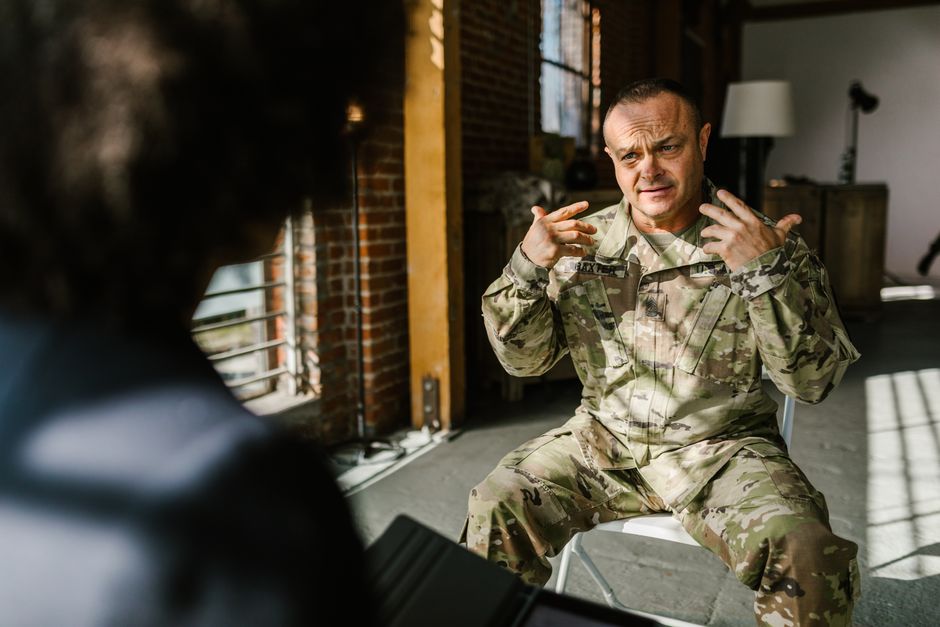
A veteran in his late 30s with combat-related PTSD. Refused therapy for eight years. Finally started CPT (specifically because the 12-session structure felt less open-ended and scary). By session nine, his PCL-5 score (a standardized PTSD checklist) had dropped from 54 to 31, a clinically significant reduction.
A college student with a history of emotional neglect who didn’t identify as “having trauma.” Tried EMDR targeted at a handful of smaller memories. Described it after ten sessions as “like the volume got turned down on everything.”
One More Thing About Support Between Sessions
Therapy once a week is a container. It’s not a complete support system on its own. Many people find that having a structured self-reflection practice between sessions helps consolidate the work. A few tools worth knowing about, though these are supplements, never replacements for working with an actual clinician:
The The Complex PTSD Workbook by Arielle Schwartz walks through CBT and somatic exercises in a genuinely accessible way. It’s around $18-$20 on Amazon, and I’ve recommended it more times than I can count. (The site may earn a commission if you purchase through a link here.) It won’t replace therapy, but it gives you something to do with the space between sessions.
Sources
- SAMHSA (2014): SAMHSA’s Concept of Trauma and Guidance for a Trauma-Informed Approach – the foundational federal framework defining the six core principles cited in this article.
- McLaughlin, K.A. et al. (2020): Journal of Traumatic Stress – research on cumulative small-t trauma exposure and PTSD symptom development.
- Ehlers, A. et al. (2010): Psychological Medicine – comparative effectiveness data on CPT and trauma-focused CBT.
- VA/DoD Clinical Practice Guidelines (current as of 2026): Recommendations for PTSD treatment including CPT and EMDR as first-line interventions.
- SAMHSA National Helpline and treatment locator: findtreatment.gov, free, confidential resource for finding trauma-specialized care.
Photo: AI25.Studio Studio via Pexels
This article is for general informational purposes only and does not constitute mental health, medical, or clinical advice. If you are in crisis or experiencing a mental health emergency, please contact the 988 Suicide and Crisis Lifeline (call or text 988) or go to your nearest emergency room. Always consult a licensed mental health professional for care specific to your needs.
Recommended Resources
Disclosure: As an Amazon Associate, we earn a small commission from qualifying purchases at no extra cost to you. We only recommend products that genuinely support the topics covered in this article.
- Feeling Good: The New Mood Therapy (~$14), The most clinically studied self-help book for depression, recommended by therapists worldwide as CBT-based self-treatment.
- Depression & Anxiety Therapy Journal (~$10), 8-week guided journal with trigger tracking and mood diary, mirrors the homework your therapist would assign between sessions.