 Taylor Brooks
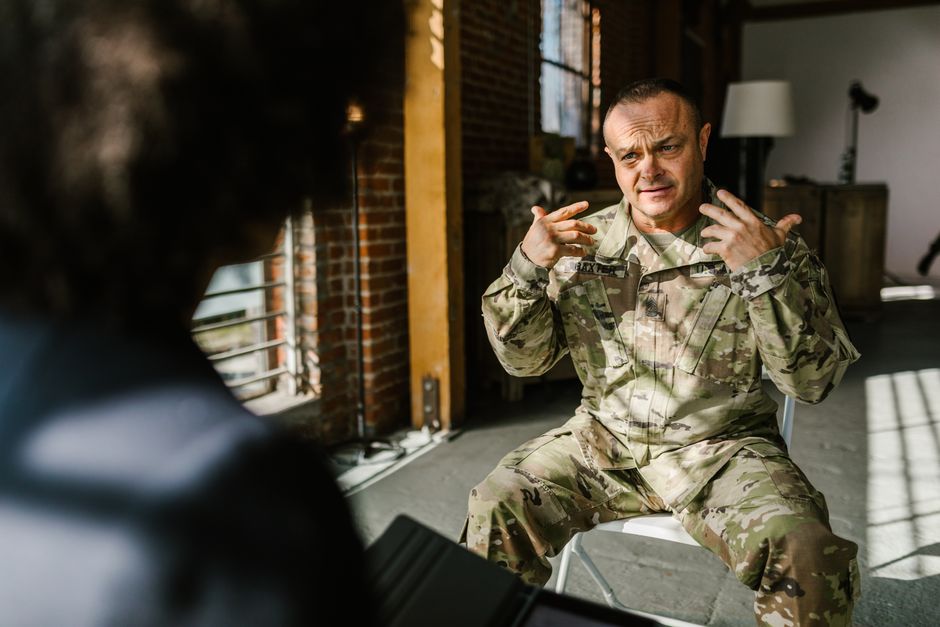
Something unexpected is happening inside therapy rooms across the country right now, and most people outside the mental health field haven’t heard about it yet. Patients are showing up to their first appointments, or their tenth, having already consulted an AI chatbot about what might be wrong with them. They’re arriving with printed conversation logs, with self-assigned diagnoses, sometimes with a whole framework for their mental health that a language model built for them overnight. A landmark survey released by the American Psychological Association on June 16, 2026 put real numbers to something therapists had been noticing anecdotally for months: 77% of psychologists now report that patients have brought up using AI for mental health support, and 39% have had patients use AI specifically to self-diagnose. That’s not a fringe phenomenon. That’s nearly 4 in 10 clinicians dealing with this regularly.
I’ll be honest, when I first saw that figure, I assumed the concern would be simple. AI bad, therapist good, warn people off the chatbot. But the more I looked at the actual survey data and the clinical conversations happening around it, the more complicated the picture got. This isn’t just a story about technology overstepping. It’s about what people do when care feels inaccessible, when waitlists stretch for months, when the cost of a single session is out of reach. The AI chatbot fills a gap. The real question is what gets lost, and gained, in that filling.
- 77% of psychologists report patients have discussed AI mental health use, per APA's April 2026 survey of 1,242 licensed psychologists.
- 39% of psychologists have had patients use AI to self-diagnose, despite chatbots lacking diagnostic capability.
- Only 16% of LLM mental-health chatbot studies have undergone clinical efficacy testing.
- Dartmouth's Therabot RCT showed ~51% symptom reduction for depression, but it was purpose-built and clinically tested.
- Illinois has moved to ban AI from delivering therapy outright, signaling real regulatory momentum.
What the APA Numbers Actually Tell Us
The APA’s 2026 Chatbots and Mental Health Survey was conducted in April 2026 among 1,242 licensed U.S. psychologists, which makes it one of the most substantive professional samples we’ve seen on this topic. The headline figures are striking, but a few of the supporting numbers stopped me cold. Thirty-five percent of psychologists say their patients are using AI as an additional mental health professional. Not as a search engine, not as a journaling tool. As a provider. And 33% say patients are using AI to directly assist in their therapy or treatment, meaning the chatbot is influencing clinical decisions in real time.
The clinicians surveyed were candid about their concerns. Ninety-seven percent worry that chatbots may inadvertently reinforce negative behaviors or dysfunctional beliefs. Ninety-four percent say chatbots cannot treat conditions with appropriate nuance. Those aren’t small minorities expressing caution. That’s near-unanimity among working psychologists. What surprised me was the specificity of the worry: it’s not just that AI gives wrong answers, it’s that AI can confidently pattern-match a person’s description of their experience to something that sounds like a diagnosis, with no ability to weigh the clinical context that actually makes diagnosis meaningful.
The Diagnosis Problem Is More Specific Than You Think
Helpful resource: Anxiety Relief Journal with CBT Prompts and Mood Tracker is a top-rated option for this. (As an Amazon Associate this site earns from qualifying purchases.)
Consumer chatbots are not designed to interpret psychological assessments or diagnose mental health conditions. This isn’t a limitation the companies are hiding. It’s structural. Diagnosis in mental health requires ruling out medical causes, tracking symptom duration, assessing functional impairment across multiple life domains, and often consulting collateral information. A chatbot working from a text conversation has access to exactly one thing: what the person chose to type, in that moment, in the way they were able to articulate it.
The risk isn’t just inaccuracy. It’s that a confident-sounding AI response can anchor a person’s self-understanding in ways that are genuinely hard to dislodge. If someone comes into therapy convinced they have ADHD because three AI conversations pointed that direction, the therapist now has two jobs: the assessment itself, and the careful work of helping the patient hold their self-concept loosely enough to be open to a different answer. That’s not impossible. But it takes time, and it changes the texture of early sessions in ways that can strain the therapeutic alliance before it’s had a chance to form.
The Evidence Gap Is Real, and It Cuts Both Ways
Here’s where the research gets genuinely complicated. The evidence on AI in mental health isn’t uniformly bad. Dartmouth’s Therabot, a purpose-built therapy chatbot, showed approximately 51% symptom reduction for depression and roughly 31% for anxiety in the first randomized controlled trial of its kind. Those are meaningful numbers. But Therabot was designed specifically for clinical use and tested rigorously. It represents a tiny slice of what people are actually using.
According to data compiled by Brilo AI in June 2026, only 16% of LLM-based mental health chatbot studies have undergone clinical efficacy testing. The rest are operating in the market without that evidence base. So when patients are using general-purpose AI tools for mental health support, they’re largely using products whose therapeutic effects, for better or worse, have never been formally measured.
| What patients use AI for | % of psychologists reporting this |
|---|---|
| Mental health support (any) | 77% |
| Self-diagnosis | 39% |
| As an additional mental health professional | 35% |
| Directly assisting therapy or treatment | 33% |
How Therapists Are Actually Responding
The APA’s guidance released alongside the survey encourages therapists to ask about AI use directly and without judgment, treating it the way they might ask about supplements or self-help books. That framing matters. Patients who feel shamed for using a chatbot are unlikely to disclose it, which means the therapist loses information they need.
What’s emerging in clinical practice, from what I can gather from therapist accounts and the APA’s own recommendations, is something like a “bring it in” approach. If a patient has a chatbot conversation log they found useful, some therapists are looking at it with them as a window into what the patient was searching for, what felt resonant, what fears they were exploring at 2 a.m. when they couldn’t sleep. That’s actually rich material. The problem comes when the patient treats the chatbot’s output as settled clinical fact rather than as one more data point to explore with a licensed professional.
Illinois has decided the risk is significant enough to act legislatively, moving to ban AI from delivering therapy outright while still permitting AI for scheduling and administrative tasks. That’s a meaningful line to draw, and other states are watching how it plays out.
What This Means If You’re Thinking About Starting Therapy
If you’ve already used an AI chatbot to try to understand your mental health, you’re in very large company. That’s not something to be embarrassed about when you sit down with a therapist. A good therapist will want to know what you’ve been thinking, what you’ve been reading, what conclusions you’ve been drawing. The chatbot conversation is part of your story.
What I’d encourage is holding any AI-generated self-diagnosis loosely. Think of it as a hypothesis to bring into the room, not a verdict to defend. Licensed psychologists, psychiatrists, and other mental health professionals have diagnostic tools, training, and the ability to ask follow-up questions in ways that a language model genuinely cannot replicate. If you’re looking for a therapist, the APA’s therapist locator, SAMHSA’s National Helpline (1-800-662-4357), and Psychology Today’s directory are solid starting points. If cost is a barrier, community mental health centers and sliding-scale clinics exist in most areas.
The AI chatbot found you when you needed something. The next step is finding a person.
Sources
- APA 2026 Chatbots and Mental Health Survey (June 16, 2026)
- APA Press Release: Psychologists say patients are turning to chatbots as mental health professionals (June 16, 2026)
- APA: Discussing AI use in therapy (June 16, 2026)
- HealthPopuli: Most Psychologists Say Their Patients Use AI for Mental Health Support (June 17, 2026)
- Brilo AI: AI in Mental Health & Therapy Statistics (2026) (June 13, 2026)
Photo: UMA media via Pexels
This article is for general informational purposes only and does not constitute mental health, medical, or clinical advice. If you are in crisis or experiencing a mental health emergency, please contact the 988 Suicide and Crisis Lifeline (call or text 988) or go to your nearest emergency room. Always consult a licensed mental health professional for care specific to your needs.
Recommended Resources
Disclosure: As an Amazon Associate, we earn a small commission from qualifying purchases at no extra cost to you. We only recommend products that genuinely support the topics covered in this article.
- Feeling Good: The New Mood Therapy (~$14), The most clinically studied self-help book for depression, recommended by therapists worldwide as CBT-based self-treatment.
- Depression & Anxiety Therapy Journal (~$10), 8-week guided journal with trigger tracking and mood diary, mirrors the homework your therapist would assign between sessions.